 © Mediaserver Hamburg-Mediaserver Hamburg – Christian Spahrbier
Energy-efficiency refurbishment of a listed building
Hamburg’s Speicherstadt World Heritage Site is set to become CO₂-neutral
Hamburg’s World Heritage Site proves that heritage conservation and climate protection are not mutually exclusive. By 2040, this unique ensemble of buildings is set to become a CO₂-neutral neighbourhood. A team of experts has laid the foundations for this as part of the ‘CO₂-neutral World Heritage Site: Speicherstadt Hamburg’ project.
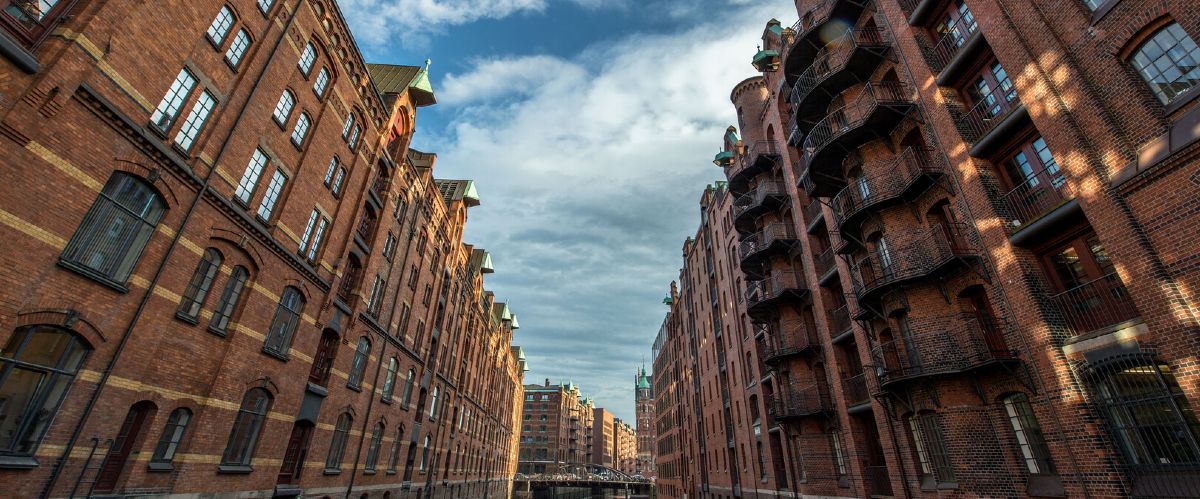
Where Hanseatic merchants once stored duty-free goods until 2003, creative agencies and businesses now have their headquarters. The buildings, which are around 100 years old, are not only a multifaceted commercial district and a tourist magnet. Representatives from the energy sector and politics, as well as those interested in construction and tradespeople, are particularly drawn to the Sandtorkaispeicher. In this building, Hamburger Hafen und Logistik AG (HHLA) has developed a new heating system, tailored entirely to the building’s specifications, as part of a research project in collaboration with researchers from the University of Stuttgart, HafenCity University Hamburg and RWTH Aachen University.
The interplay between heritage conservation and energy-efficient refurbishment
 © DEMIRAG Architekten
“Achieving carbon neutrality in listed buildings is an extremely complex undertaking,” says (research) project coordinator Peter Modlich, head of project development at HHLA. “But we have demonstrated in the pilot project that it works.” The aim of the joint project was to develop a holistic approach that integrates structural measures, innovative building services systems, digital models and subsequent operation.
 © HHLA
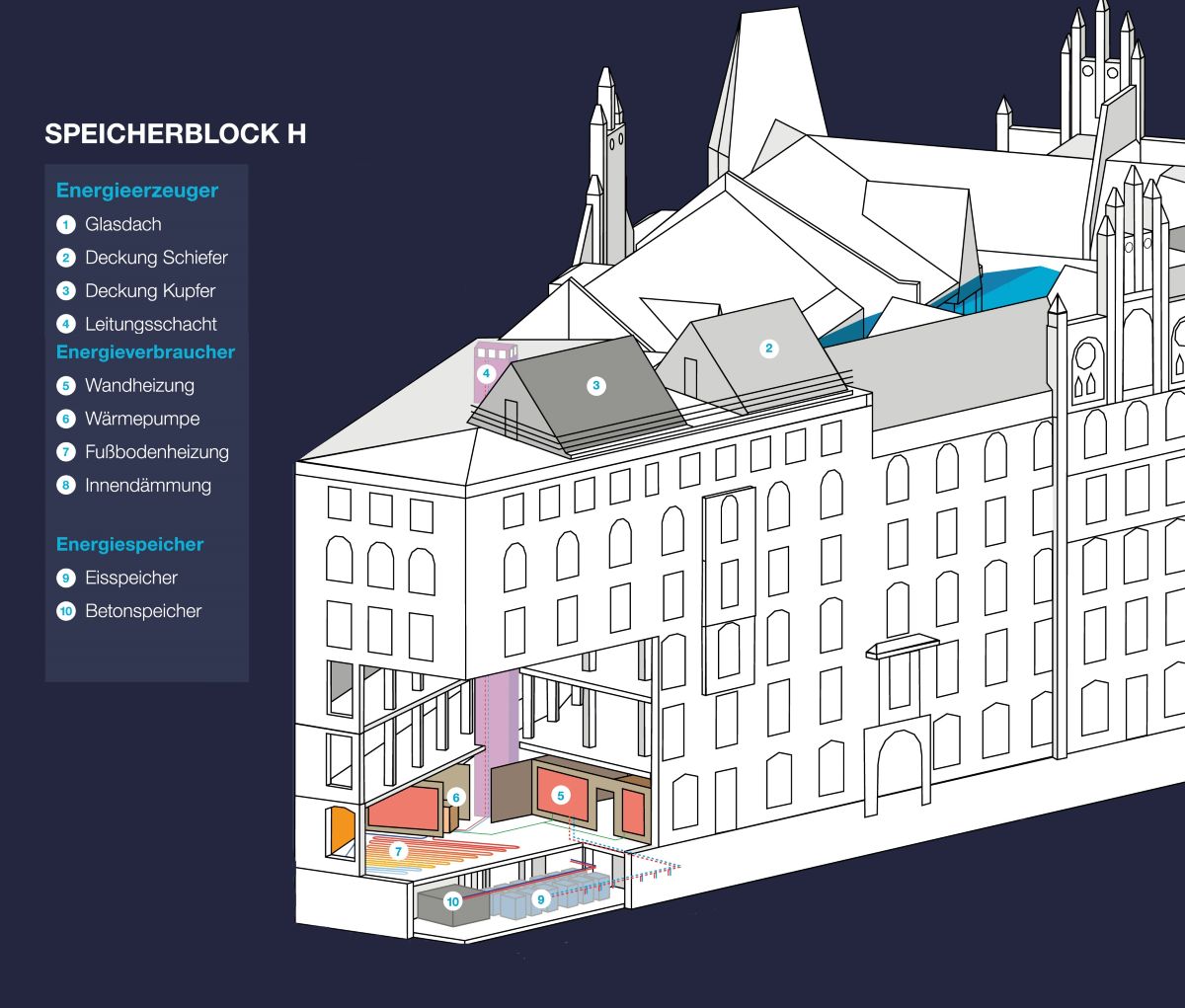
“Based on this systemic approach, we have developed components and measures within the project for both the physical building and its digital twin,” reports project partner Professor Harald Garrecht from the University of Stuttgart. These included interior insulation measures compatible with the building’s heritage status, thermally and electrically activated roof surfaces, hybrid thermal storage solutions and low-temperature heat transfer systems. In addition, a Building Information Model (BIM) was established as an integrated data platform and linked to energy and fluid dynamics simulation models.
Innovative Dachflächenlösungen in historischem Erscheinungsbild
 © HHLA
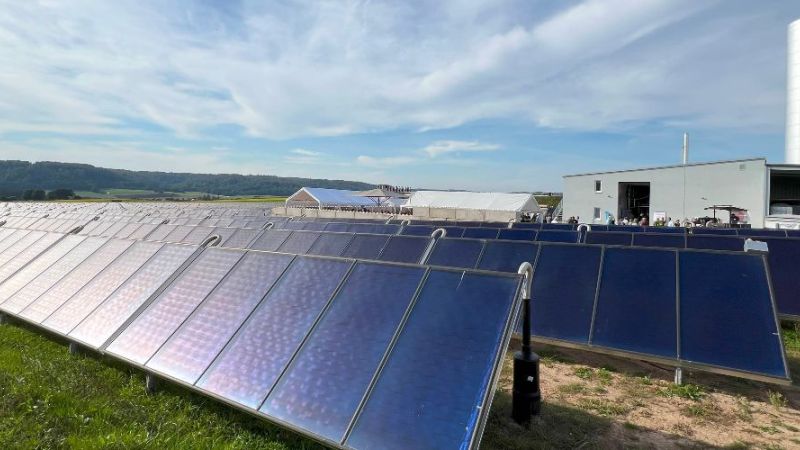
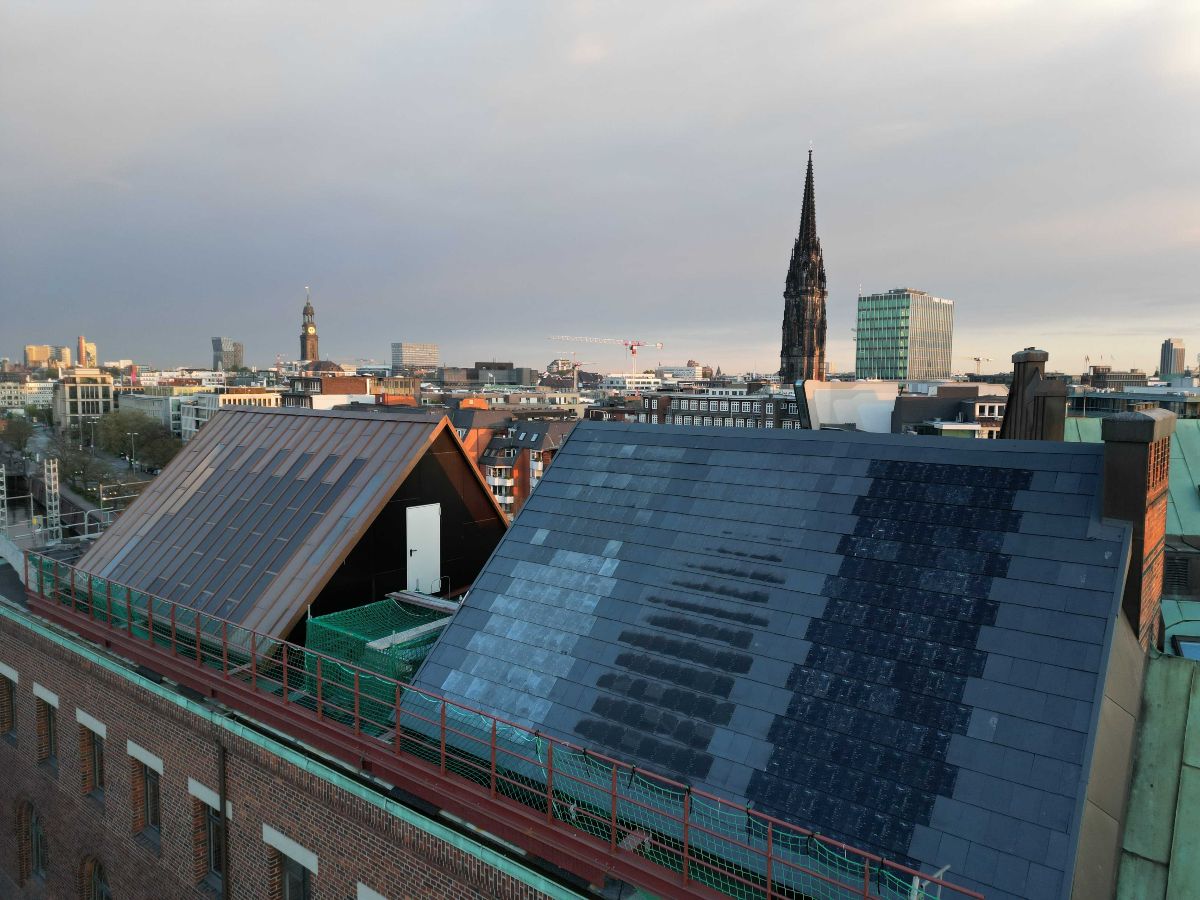
A specific work package: in collaboration with the heritage conservation authorities, innovative roof solutions had to be found to generate electricity and recover ambient heat. However, the historic appearance of the roofscape was not to be altered. To this end, the research team developed thermally and electrically activated roof elements made of concrete with a slate-effect finish and copper, and tested them on site. Beneath the roofing, there are also heat exchangers that extract heat from the surrounding environment. “These roof systems are not available off the shelf,” reports Harald Garrecht. “They were developed specifically for this building in collaboration with specialist tradesmen.”
Storage in the cellar, high-performance insulation on the inside
A heat pump distributes the heat throughout the building. The basement also houses various storage units, including a concrete storage tank developed as part of the research project. “Originally, we wanted to thermally activate the quay walls on the outside, but this was not possible within the short timeframe due to planning permission requirements. We therefore had to find another solution,” explains Peter Rosenzweig, the architect responsible for managing the research project on behalf of HHLA.
As the exterior façade of the office building cannot be altered for reasons of heritage protection, the project team also developed a high-performance insulating render, just 35 millimetres thick, for the interior walls. “This internal insulation improves the wall’s thermal resistance by a third. This means we can operate the underfloor heating in the rooms at just 35 degrees,” explains Harald Garrecht.
“Our systematic approach and the insights gained from it can be applied to other listed buildings and neighbourhoods.”Prof. Harald Garrecht, University of Stuttgart
The findings from the research project ‘CO2-neutral World Heritage Site: Speicherstadt Hamburg’ show that reliable conclusions regarding the energy performance of complex existing buildings can only be drawn through the systematic comparison of simulation, measurement and actual operation. The findings will be applied throughout the Speicherstadt over the coming years. The plan is to carry out energy-efficiency refurbishments on all buildings by 2040.
“We have received both heritage conservation and planning permission for our solutions.”Peter Rosenzweig, HHLA architect and project manager
The research findings are also of interest to project developers, architects, energy specialists and others. This is because the project provides transferable methodological and technical approaches for planning practice. It demonstrates how integrated refurbishment strategies for listed neighbourhoods can be developed, evaluated and implemented step by step. (it)