
How funded research projects lead to major innovations
Research funding from the Federal Ministry for Economic Affairs and Energy (BMWE) under the 8th Energy Research Programme is provided in accordance with the competitive principles of project funding. It follows the recommendations of the Expert Commission for Research and Innovation (EFI), which has, in particular, highlighted a mission-oriented approach and agile structures for effective good governance as key elements of sustainable innovation funding programmes. Project funding thus serves as a powerful tool for stimulating targeted innovation, research and development in areas relevant to energy and climate policy objectives. The practical relevance of the proposals is a key criterion in this regard.
Targeted, efficient and carefully managed allocation of funds in line with energy and economic policy priorities
Major transformation projects do not happen by chance. They require planning and management. Project funding is a particularly effective element of funding policy, especially for a monumental societal challenge such as the energy transition and the goal of achieving a resilient and, at the same time, climate-neutral energy system by 2045. In this way, the BMWE can target the available research funding specifically at urgent technological developments and at priorities relating to energy, climate and innovation policy – for example, hydrogen technologies or climate-neutral heat supply. At the same time, this gives companies the necessary assurance that not only the technical but also the economic risks associated with their research will be reduced.
Project funding enables leaps in innovation
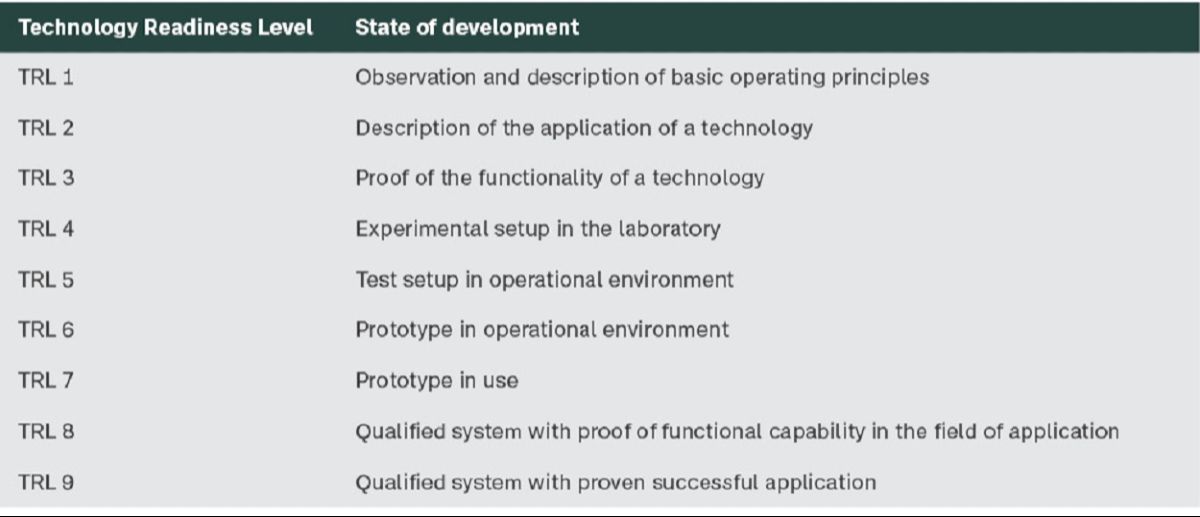
A survey of project participants conducted in 2024 by the project management organisation Jülich on behalf of the BMWE showed that the level of technological development increases significantly during the project period. The so-called Technology Readiness Level (TRL) rises by an average of two to three levels. By the end of the project, most projects thus reach a TRL of 6 to 7. Project funding therefore contributes directly to the faster development of new technologies.
Collaboration between research institutions and industry boosts innovation and strengthens the region’s position
Project funding promotes cooperation between universities, research institutes and businesses. In the field of energy research, this is centred on interdisciplinary collaboration. The results can therefore be applied directly in practice by the participating industry partners: either in follow-up projects or for subsequent market launch.

Rapid, targeted transfer of research into business and consumer practice
Through targeted calls for proposals in project funding, the state can support technological trends at an early stage and thus bring innovations to market more quickly. Furthermore, the involvement of companies in the funded projects ensures a link to practical applications in the energy sector.
Greater innovative capacity through the mitigation of technological and economic risks for companies
Research and development in the energy sector are often associated with high costs and uncertain outcomes. Direct funding within the framework of projects reduces this risk by offering companies financial security. This applies in particular to small and medium-sized enterprises. Project funding encourages research institutions and companies to take risks. This enables disruptive technologies to emerge – as funding does not depend on short-term profits.
A clearly defined research focus and monitoring of programme progress
In funded projects, research teams develop solutions to clearly defined research questions. This sharpens the objectives that a project is intended to achieve. This focus enables rapid progress to be made.
A dynamic and agile instrument of energy and economic policy
Within the framework of project funding, research can be dynamically adapted to current challenges. Projects are usually planned to run for three or four years. This allows for regular and targeted decisions on whether the research direction continues to align with the objectives of the specific mission area.
Effectiveness and efficiency of funding demonstrated through evaluation and performance monitoring
Project funding is linked to clear objectives, milestones and evidence of success. This enables the federal government to use this instrument to ensure the efficient use of taxpayers’ money whilst also guaranteeing that research develops the necessary innovations that are essential for the energy transition.
Continuing to provide effective funding in the future
Every policy funding instrument, whilst having advantages, also always has room for improvement. A survey conducted by the project management organisation Jülich amongst grant recipients frequently highlighted the need to allow for more flexible project structures in terms of the duration and scope of projects. These should be better aligned with the development cycles of the economy. At the same time, application processes should be streamlined and shortened.
In the 8th Energy Research Programme, the BMWE is implementing a ‘learning programme’ through an advisory board, input from the energy research networks and, not least, a comprehensive programme evaluation. This generates valuable impetus for the continuous optimisation of the programme and its funding instruments. Furthermore, the BMWE is committed to close cooperation between applied energy research and the organisations responsible for basic research.