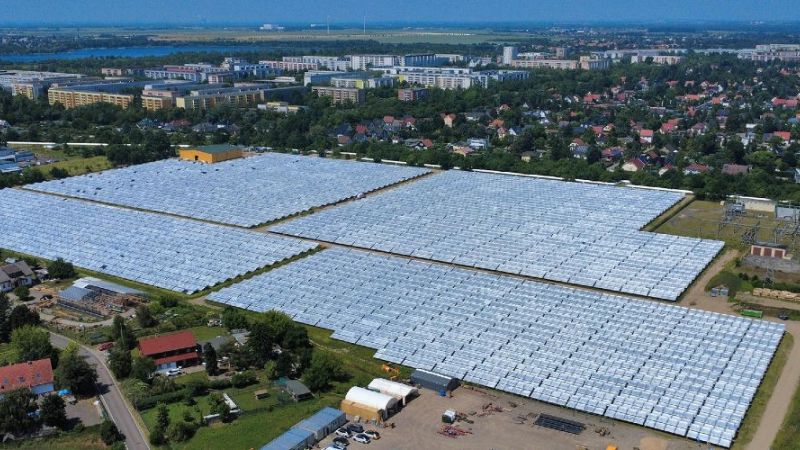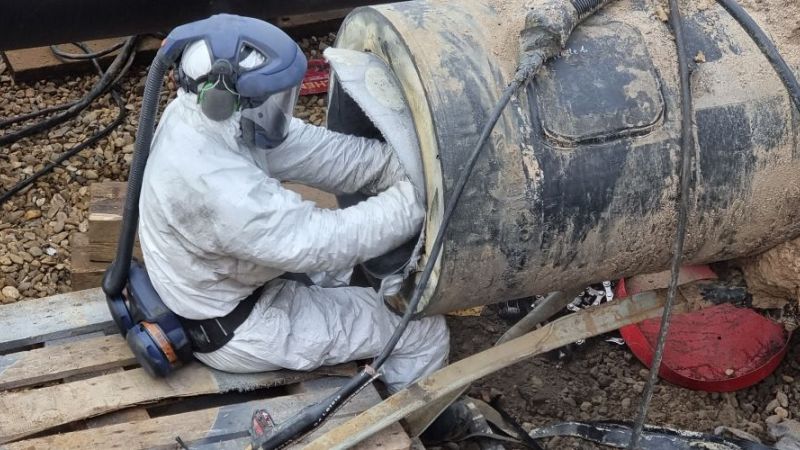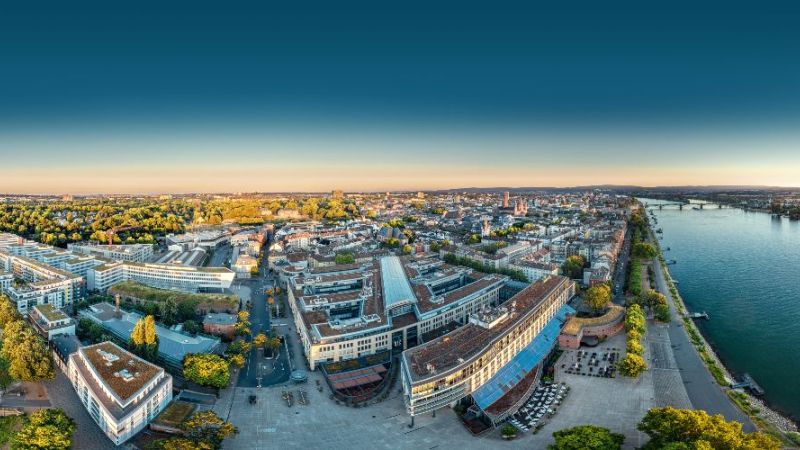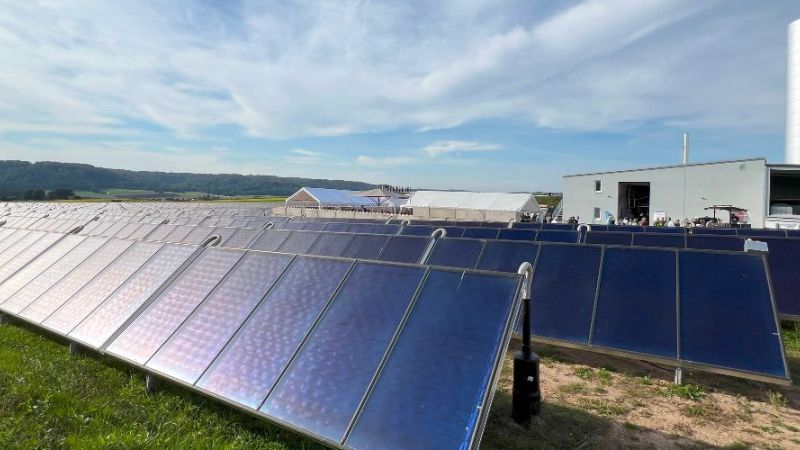
 from left to right: © www.peopleimages.com – stock.adobe.com, © GFZ, © Hamburger Energiewerke, © Solmax, © francescoridolfi.com – stock.adobe.com
Micro projects as case studies
URBAN ARENA lays the foundations for seasonal heat storage
The project partners held an event in Berlin in June, marking the next stage of the URBAN ARENA Seasonal Heat Storage initiative: the final three of a total of 23 micro projects starting in June.
21 heat suppliers and 14 research institutions are participating in the research projects. In addition to project-related work, they engage in regular exchanges through workshops, field trips and events such as the event held in Berlin. Participants share expertise, needs and research strategies with one another, which in turn can be utilised for their own work: this creates added value that extends beyond the individual projects. The feasibility studies based on case studies are shared across Germany. This approach offers various positive examples for the transformation of heat supply in cities and municipalities.
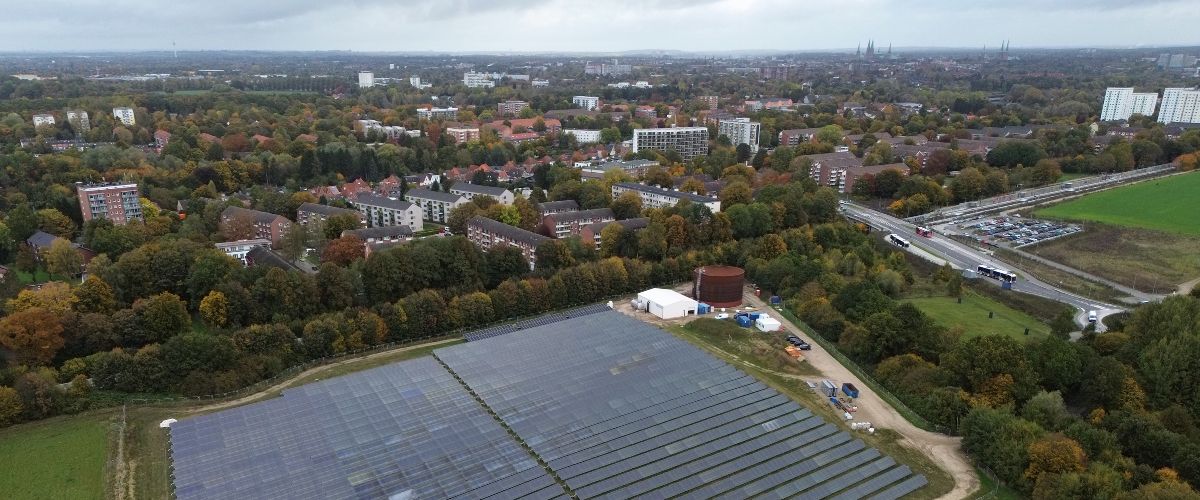
All concepts share a common feature: in line with the format, they incorporate a seasonal heat storage system. “The use of seasonal heat storage on this scale for urban heating networks – particularly given the space constraints on site – is entirely new and highly innovative. As a result, the challenges involved are considerable,” says Christian Thommessen, who leads the HANSE project in Lübeck on behalf of the Chair of Energy Technology at the University of Duisburg-Essen. The research focuses on integrating an underground thermal energy storage system into a district heating network that will be supplied largely by renewable energy sources. As part of the project, the local utility plans to combine up to six previously separate heating networks into a single integrated system.
Underground thermal energy storage as part of Lübeck’s energy infrastructure
 © Municipal utilities Lübeck Energie
The Chair of Energy Technology is investigating two key aspects of the project. Firstly, it concerns the interaction between the seasonal storage system and the energy generation facilities: solar thermal systems, large-scale heat pumps, electric boilers, combined heat and power plants, and backup heating plants. Secondly, it concerns the energy infrastructure, i.e. the heating network itself: “We need to examine the network’s hydraulics and thermal dynamics – in other words, whether an underground storage tank can be integrated at a given location or whether this would impose restrictions on the operation of the heating network,” explains Thommessen, “or whether additional measures will be required. For example, it might be necessary to lay larger pipes to connect the storage tank.” The researchers are currently evaluating potential sites with the support of a planning consultancy – at the initially proposed location, only 100,000 cubic metres of storage space would be possible for the basin instead of the 300,000 cubic metres originally envisaged, which corresponds to an area of just over two football pitches. “Ultimately, however, the outcome is still open; we are also keen to find other sites with greater potential,” says Thommessen. The Lübeck case highlights the steps involved in assessing seasonal heat storage solutions. The outcome of the HANSE project will be a case study on the integration of a seasonal underground storage tank, taking into account technical, ecological and economic aspects, which can provide valuable guidance for municipal utilities facing similar challenges.
Aquifer storage captures waste heat from Bremerhaven’s waste-to-energy plant
 © swb AG
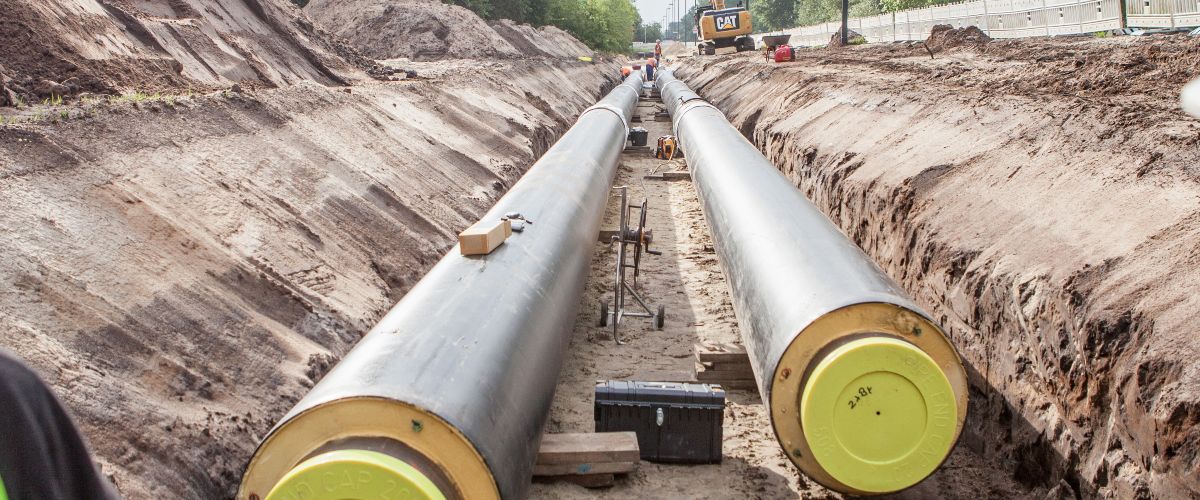
For wesernetz – the local district heating network operator in Bremerhaven – sustainability means: “We make full use of what is already there before we build anything new. Especially if it has been working well and reliably for years,” says Florian Klein, project lead for the ATES-Systl micro project at wesernetz. The principle is reflected in the city’s waste-to-energy plant, which supplies heat to the district heating network. The operator is currently connecting a local heating network, previously supplied by gas, to this system, with funding already secured for the project. “The waste heat generated by the plan is currently sufficient to meet this demand,” explains Klein, “However, the new pipeline passes through a major development area, and we will need seasonal storage to supply this area in the future.” This is where the micro project comes in. Researchers at the Fraunhofer Institute for Energy Infrastructure and Geotechnologies IEG are investigating the conditions required to integrate an aquifer storage system. In such a system, a geological formation at a depth of around 600 to 700 metres stores heat, which can later be recovered when needed.
“The geological formation, known as the Brussels Formation, already has an elevated natural temperature, making it suitable for storing heat at relatively high temperatures,” explains Dr Nora Koltzer from Fraunhofer IEG. “Several site characteristics in Bremerhaven are particularly promising. As a result, this project is among the most advanced within URBAN ARENA.” Previous studies have shown that the Brussels Formation has good permeability and is generally well suited for thermal energy storage. “However, it has not yet been used for this purpose,” says Olga Knaub from Fraunhofer IEG. The researchers are now assessing both the geological conditions on site in Bremerhaven and the most effective way to integrate an aquifer storage system into the district heating network. Importantly, such a storage facility does not affect groundwater resources. The groundwater table is located only around five metres below the surface, whereas the storage formation lies at a depth of approximately 600 to 700 metres.
Solar thermal energy with geothermal storage in the hills of Müsen
 © Jürgen Lemke, BEG Müsen
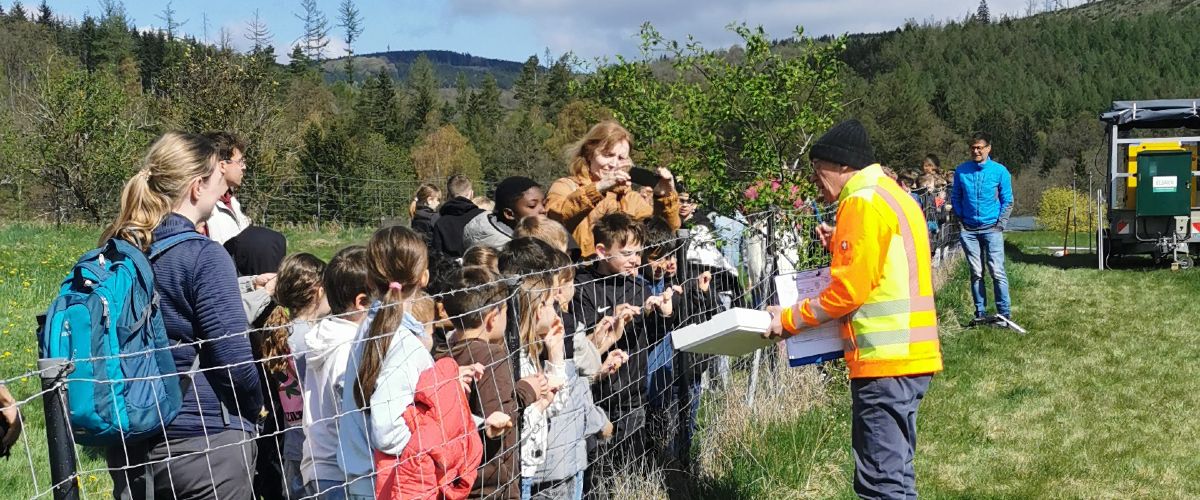
The situation in Müsen, a district of Hilchenbach in North Rhine-Westphalia, is very different. No preliminary geological investigations have been carried out, and the district is located in a hilly landscape. “We have hills rising more than 150 metres on either side, and the village sits in what is essentially a dead-end valley,” reports Jürgen Lemke from the Müsen Citizens’ Energy Cooperative. Biomass has been ruled out as an option. “Local residents have expressed clear opposition to it because, depending on wind conditions, emissions from combustion could accumulate in the village,” says Lemke. Instead the project is exploring a combination of solar thermal collectors and geothermal heat storage supported by ground-source heat pumps as a route to climate-neutral heating. The aim of the URBAN ARENA micro project MultiHeat is to use detailed simulations to determine how such a system could be designed. Existing projects, including the solar heating network combined with a large underground water storage tank Bracht (Hesse) and the solar heating network with geothermal storage in Crailsheim (Baden-Württemberg), provide valuable reference examples. The research is being carried out by the Institute for Building Energy, Thermal Engineering and Energy Storage (IGTE) at the University of Stuttgart, which can draw on extensive operational experience from the Crailsheim system.
 © Jürgen Lemke, BEG Müsen
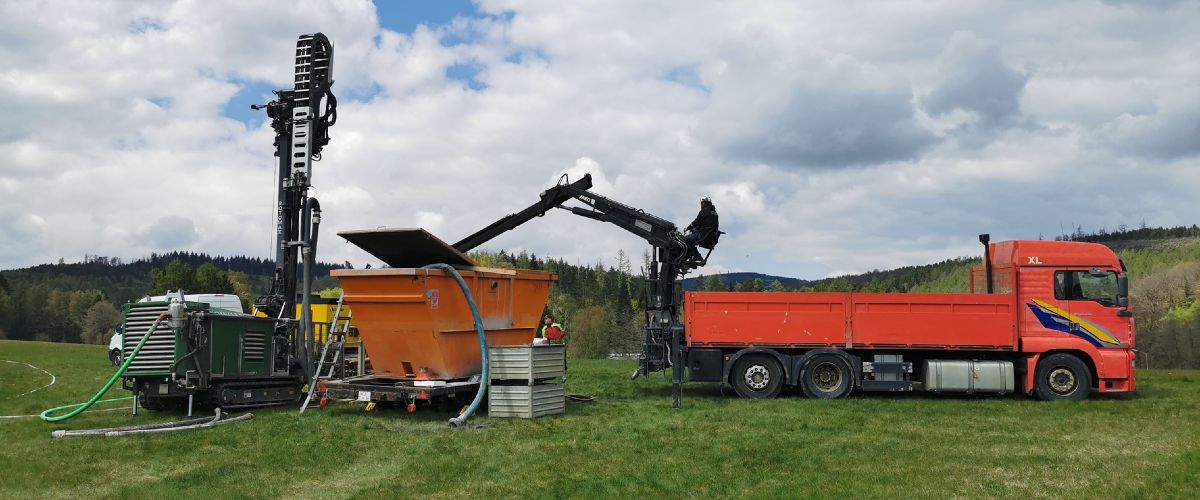
MultiHeat was the first URBAN ARENA project to launch in January. A test borehole and thermal response test were completed recently, and the measured data are now being used to determine the ground conditions and design requirements for the geothermal probe system. “In collaboration with the community energy cooperative, we first identified an annual heat demand of 7.2 gigawatt hours,” says Dr Harald Drück of IGTE. “We then analysed a baseline configuration to determine the collector area and storage capacity required to meetr 60, 70, 80 per cent of that demand using solar energy.” The remaining demand could be covered using surplus electricity generated by wind power. Regional conditions are favourable, and participation in the balancing energy market through a power-to-heat system is another potential option. The resulting case study will provide a practical blueprint for the decarbonisation of rural heating systems and could support many other community energy cooperatives pursuing similar projects. The results of all 23 URBAN ARENA micro projects will be published in spring 2027. (mb)