 © ZAE Bayern
Thermal heat storage for industry
“It is crucial that the storage technology is suitable for the specific application.”
Dr. Andreas Hauer Mission Heat
The use of large heat pumps and other heat generators is increasing the demand for thermal storage in industrial context . However, the applications are diverse and so are the requirements for the equipment. Dr. Andreas Hauer from ZAE Bayern explains which types of storage are currently being discussed.
Dr. Hauer, do you agree with Bitkom's assessment that the waste heat generated by data centers in Germany today would already be sufficient to heat 350,000 homes?
Andreas Hauer: I wouldn't rule that out. Data centers are a major source of waste heat. Using this heat to heat buildings and neighborhoods, for example, certainly makes sense. But we need storage facilities for more than just temporary storage of waste heat. In the future, more and more energy will be available from wind and solar power. This energy is mainly available in the form of electricity and is subject to fluctuations. That's why the idea is to first convert surplus electricity into heat and store it until it is needed.

How should heat storage systems be designed for industrial use?
The key point is that we need to keep an eye on the “temperature” parameter. We need to convert electricity into heat at a temperature that is suitable for industrial processes. And to do that, we need the right kind of storage systems.
What types of storage systems do you see being used for which applications?
Sensitive storage systems are suitable for many applications. This involves using a storage medium that I heat up—for example, water in steam storage systems. Steam storage systems are already frequently used in industry. They are state of the art. This is because many processes involve steam. Perhaps these processes will be solved differently in industry in the future. But steam is also an ideal distribution medium, for example in a large chemical plant. Steam is a good way of transporting heat.
Another type of storage that is suitable for certain industrial processes is latent heat storage. Here, the heated storage medium undergoes a phase change at a certain temperature.
Ice, for example, turns into water, or metal becomes liquid through a melting process. The interesting thing is that a great deal of energy is stored in the phase transition. And the phase change occurs at the melting temperature without external control. The material does this on its own.
Are such latent heat storage systems already in use?
To a limited extent, for example in the food and pharmaceutical industries. Our coCO2vac project team, for example, helped to ensure that Covid vaccines could be transported during the coronavirus pandemic thanks to a latent heat storage system. The vaccine must always be kept refrigerated at a minimum of minus 70 degrees Celsius. This can be achieved through external cooling. However, this is very impractical during transport. In coCO2vac, we worked on reusable and therefore energy-saving cooling packs that have a melting temperature of minus 70 degrees Celsius.
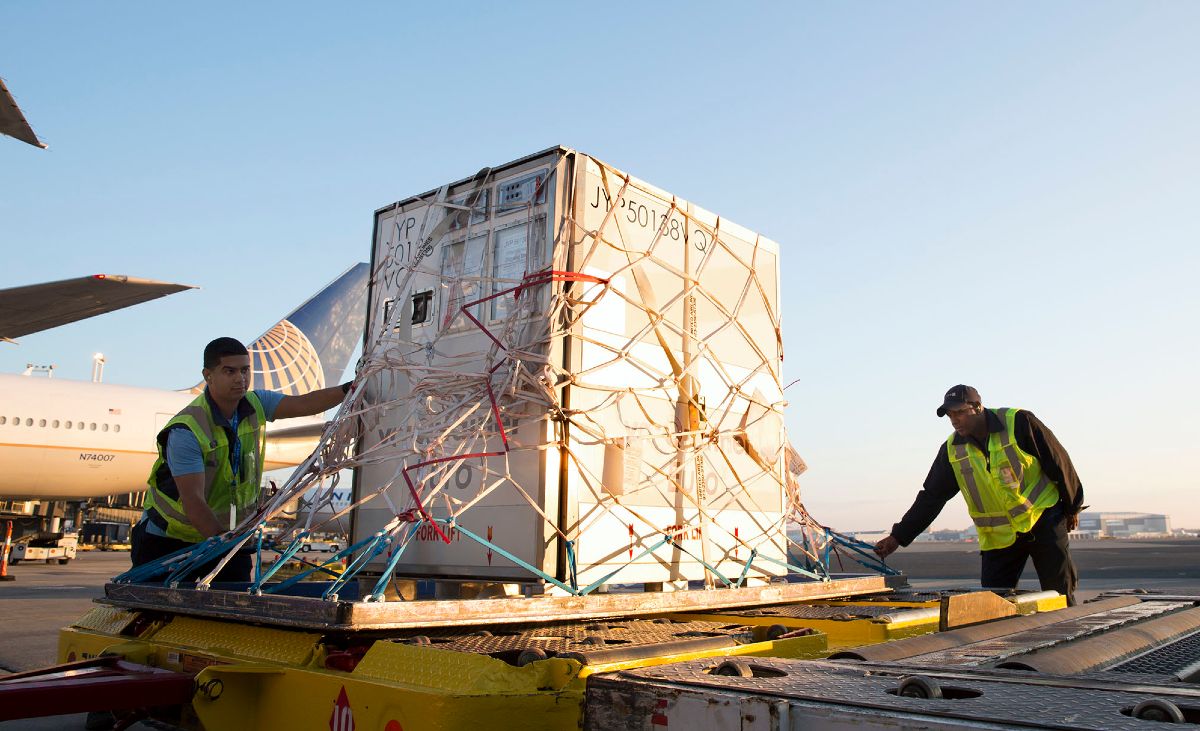 © va-Q-tec AG
What is the third type of thermal storage?
These are known as thermochemical storage systems. These are still very much in the research phase. Thermochemical storage systems work on the basis of reversible reactions that can absorb and release thermal energy.
Are there already practical examples of thermochemical storage?
There are few, but one very specific example from our research comes to mind: since 2011, there have been dishwashers on the market with this type of storage built into the base. The storage consists of zeolite pellets. These are heated, dried, and “energetically charged” in the water heating mode. During the dishwasher's drying cycle, the pellets absorb moisture, releasing the stored heat. At the end of the drying cycle, all the water is bound back into the zeolite. The storage system reduces the energy consumption of the washing cycle by 25 percent.
Why are there relatively few heat storage systems in industry to date? Is it the cost?
I would actually say that it is not necessarily the cost. Since we generally have high cycle counts in the industrial sector, even more expensive investments can pay off. The problem is that we have a great many different processes in industry. There is no one solution for everything, as is the case in the building and neighborhood sector, for example. There, the solutions, such as heat pumps, are extremely standardized.
What does that mean for research?
For the different heat sources and processes in the industrial environment, I need a more or less individual concept for each company. This means that we have to work very hard on tools so that we can offer companies solutions for their specific heat requirements with appropriate storage options. Above all, I see a growing need for engineering consulting services and suitable software solutions. And last but not least: good reference projects are needed to establish thermal heat storage on a larger scale in industry.
Are there any such reference projects?
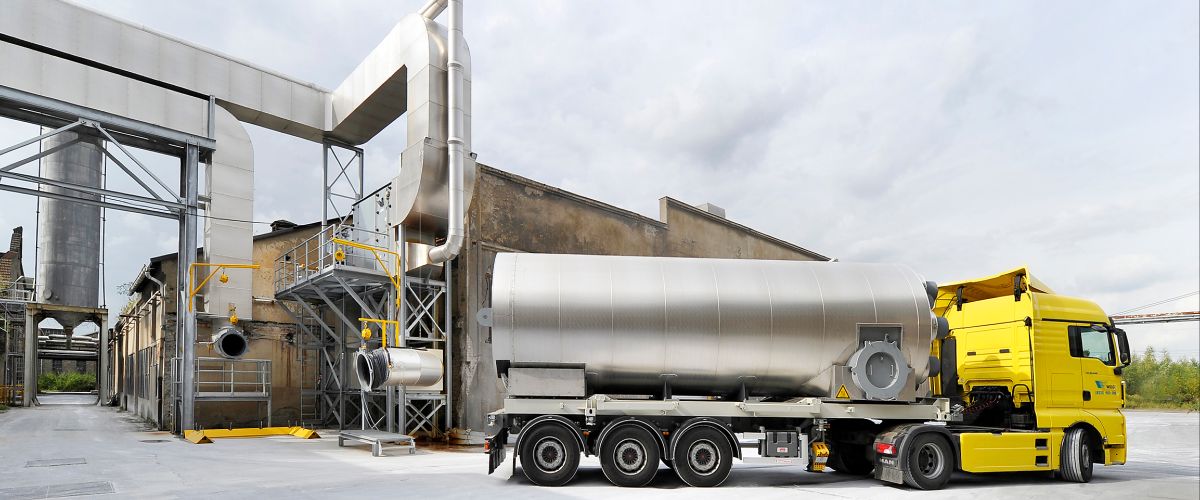
At ZAE, for example, we developed a thermochemical mobile storage system in the MobS research project. In this project, waste heat from a thermal waste treatment plant was stored on site and then transported eight kilometers to an industrial drying process. This worked well technically, but was a little too expensive. Against the backdrop of significantly higher energy prices, we now need to take another closer look at this.
Where do you currently see the greatest need for research?
Thermochemical storage systems are still in the earliest stages of development, while latent heat storage systems are already more advanced. Sensitive heat storage systems are the most developed. However, high temperatures are a challenge for all three types of storage. In the case of latent heat storage, a lot of research is being done in the field of materials research and heat transfer, especially with regard to heat exchanger geometries.
What research questions are the focus of thermochemical storage?
Thermochemical storage is about the pairs of substances that react with each other. Which pairs are suitable? What reactors or exchange surfaces are available and how should I design them? Finally, it should be noted that as a researcher, I always have to keep the specific application in mind. The application specifies the number of cycles. This allows me to calculate the payback periods. That is a very important point. I cannot develop in a vacuum.
How do you assess the Heat Transition Mission as a funding instrument?
I am a big fan of the 8th Energy Research Program. I think it's good to focus on the areas that need to be solved rather than the technology. It's about solving the problems with an eye on the needs.
The interview was conducted by Ilse Trautwein, science journalist at Project Management Jülich.