 © PPR Germany
Simplified process
Refurbishing district heating pipes more efficiently
The approximately 3,800 district heating networks in Germany form a key pillar of the energy infrastructure. Many of these pipelines have now reached the end of their planned service life and require refurbishment. Several projects funded by the Federal Ministry for Economic Affairs and Energy (BMWE) demonstrate how this can be achieved more efficiently than before.
District heating networks in Germany have been installed since the 1950s and are now reaching the end of their planned service life. At the same time, replacing the pipelines is very costly: Masses of soil have to be excavated and the surfaces subsequently restored, road and delivery traffic is disrupted, and residents are inconvenienced by construction noise and dust.
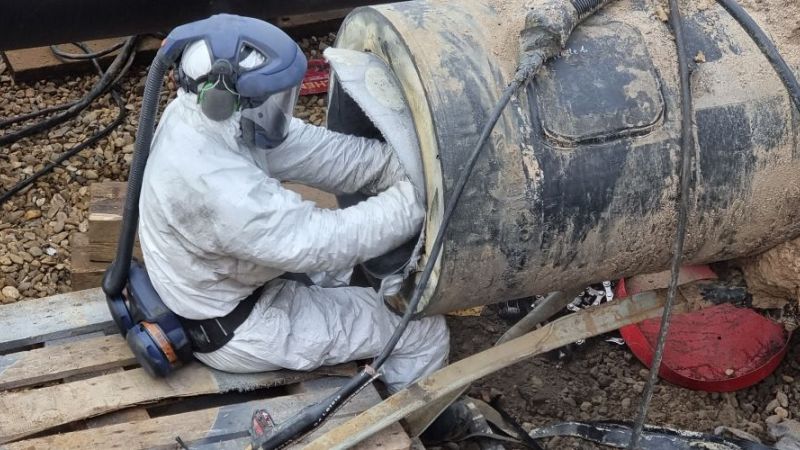
In the "FW-Liner" project funded by the German Federal Ministry of Economics Affairs and Energy, experts led by "AGFW - Der Effizienzverband für Wärme, Kälte und KWK" have now developed a more efficient and environmentally friendly solution. To do this, they are using a process that is already used in pressureless wastewater networks and drinking water pressure networks: so-called hose liners, which are impregnated with resin and made of glass fiber-reinforced plastic (GRP), are inserted into the pipe system and harden on site. One manufacturer of these liners, SAERTEX multiCom GmbH, is part of the FW-Liner research consortium.
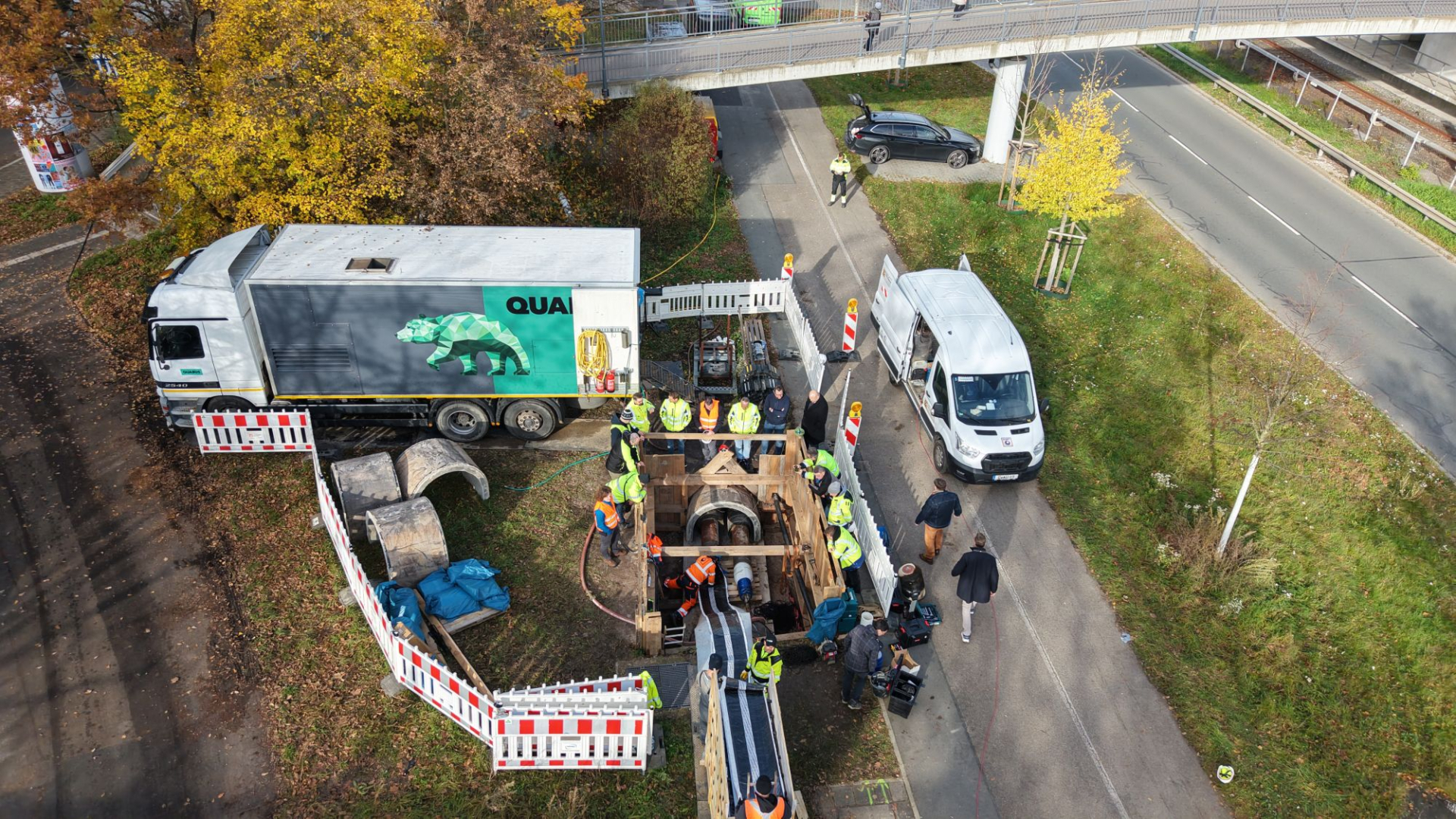
Here, a carbon fibre liner is being inserted into a district heating network in Nuremberg.
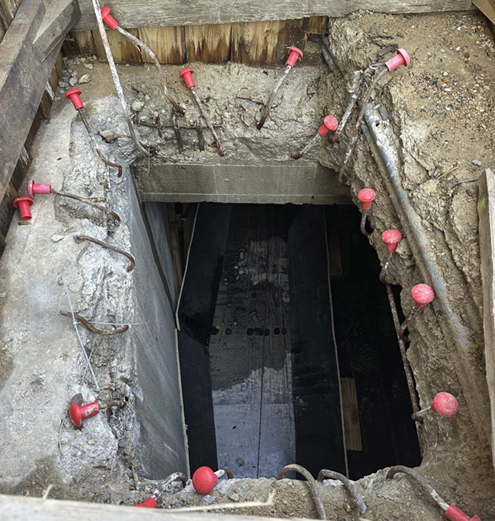
The project partner Saertex manufactures hose liners that are impregnated with resin and made of glass-fibre-reinforced plastic. Here you can see the access point for such a liner at a construction site in Paris.
Frequent temperature fluctuations put a strain on pipes
District heating pipelines are subject to higher temperatures and different pressure conditions than wastewater and drinking water networks. "We have adapted the hose liners commonly used there to the thermal, mechanical and chemical stresses in district heating pipelines," explains project manager Sebastian Grimm from AGFW. "In doing so, we focused on the hot water district heating systems most commonly used in Germany."
According to experts, as more volatile renewable energy is fed into the grids in the future, and sector coupling and the associated changes in the electricity and heating markets increase, these stresses are expected to increase. Older district heating systems, in particular, are not designed for this.
Of the typical damage to district heating pipes, only those where the internal carrier pipe itself is affected can be repaired with a liner. These include defective weld seams, which can lead to leaks, or corrosion damage. "If a FW liner is used, maintenance measures can also be carried out selectively so that only individual network sections are affected. This reduces costs and means that the supply can be restored more quickly," says Grimm.
Materials suitable for district heating identified
Resin, glass fiber fabric and protective film: These components of the hose liner in particular had to be optimized for the high loads in district heating networks. This means that the overall system must remain sufficiently leakproof and load-bearing at temperatures of up to 130 degrees Celsius. In addition, the experts had to ensure that medium- and long-term material changes would not have a detrimental effect on the heating medium.
The glass fibres are processed into a ‘fabric’ which is impregnated with resin. The combination of glass fibre and resin forms glass-fibre-reinforced plastic (GRP). The inner liner serves as an additional sealing element before, during and, if necessary, even after the resin has cured. Only once the resin has cured does the flexible hose become a rigid pipe.
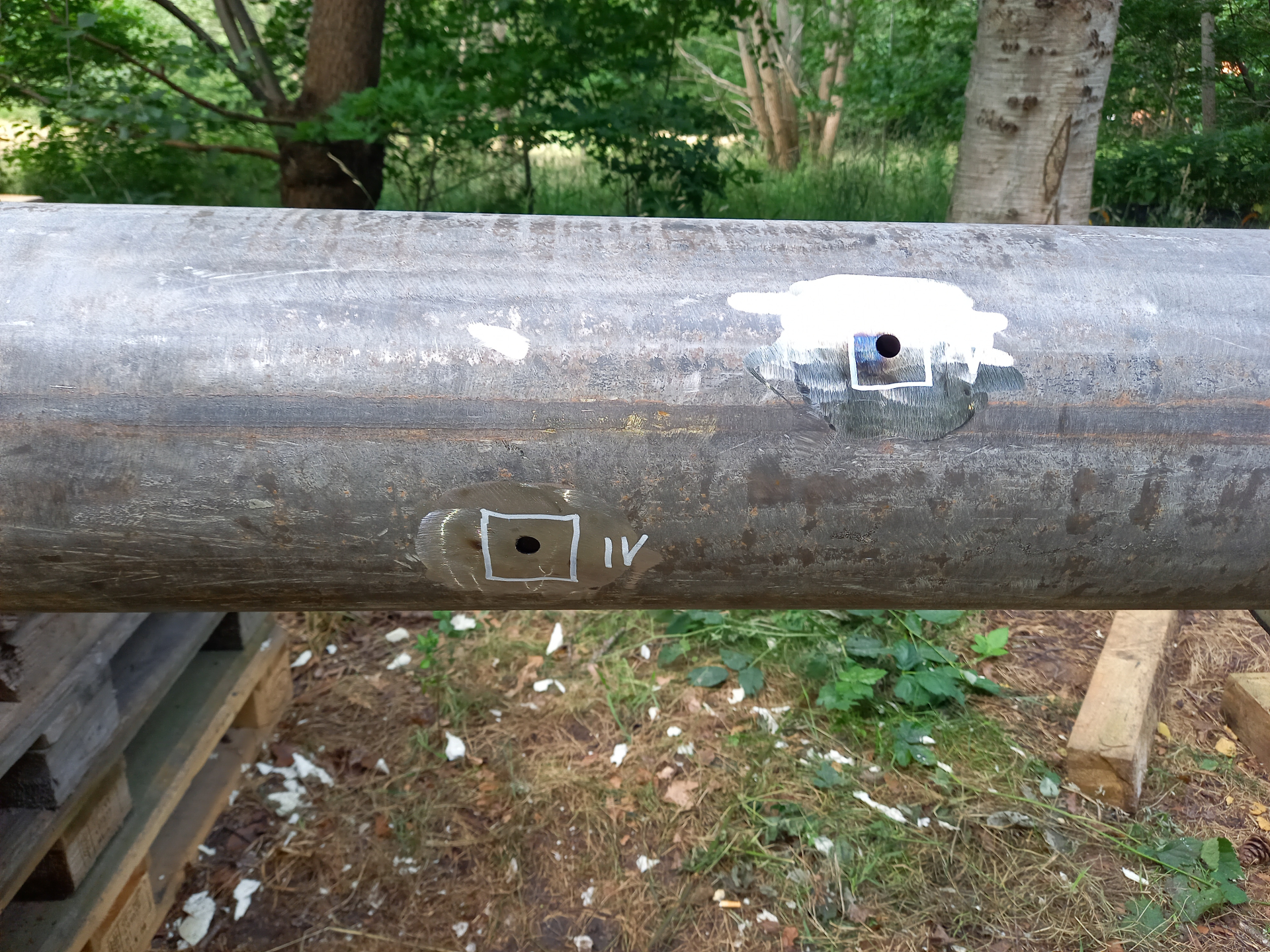
To test the liner under realistic conditions, the project partners simulated corrosion damage to the media pipe. To do this, they drilled holes with a diameter of 12mm and weakened the wall thickness around the boreholes.
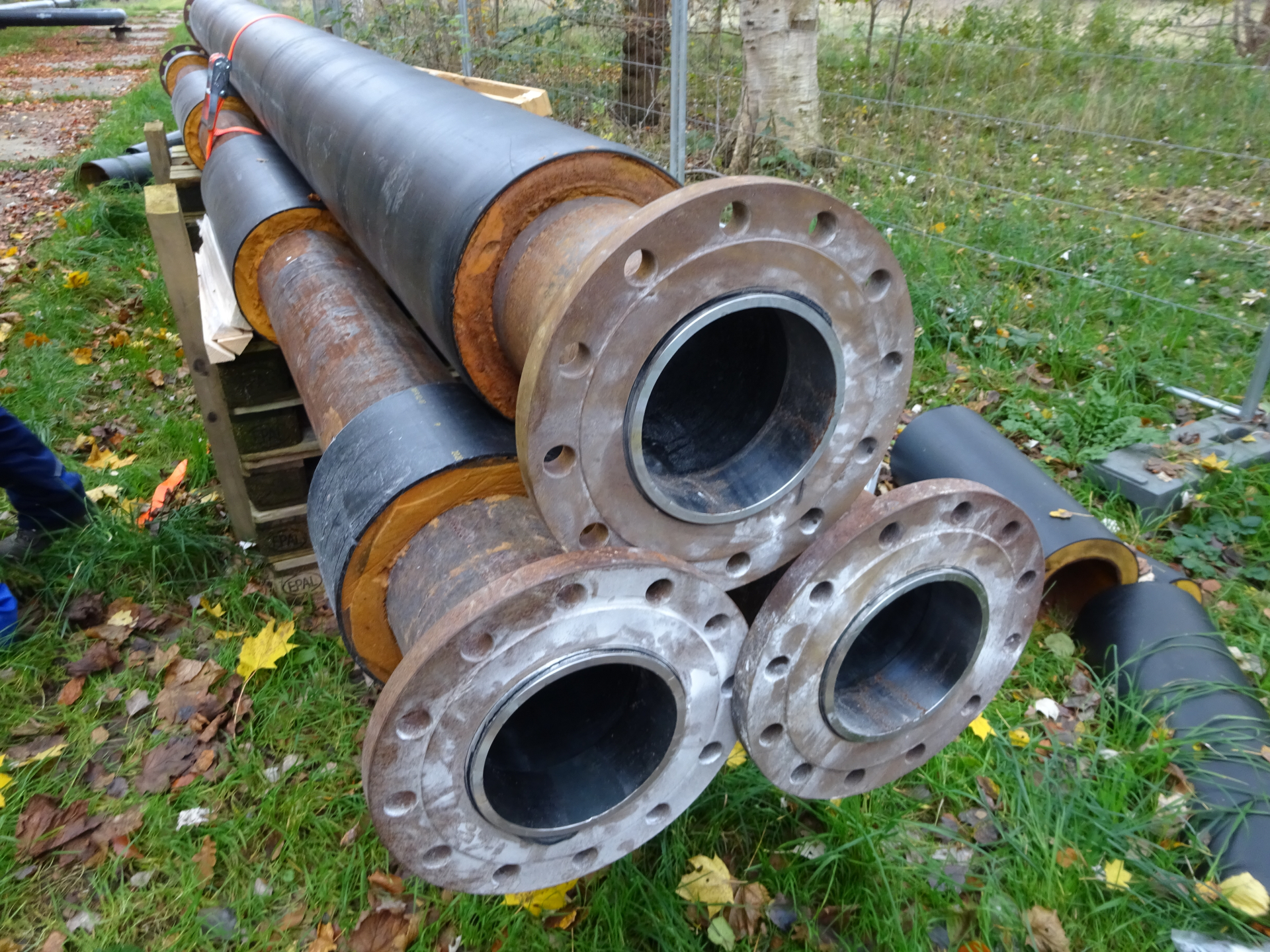
Three subsegments of the first prototype lined in advance at the plant.
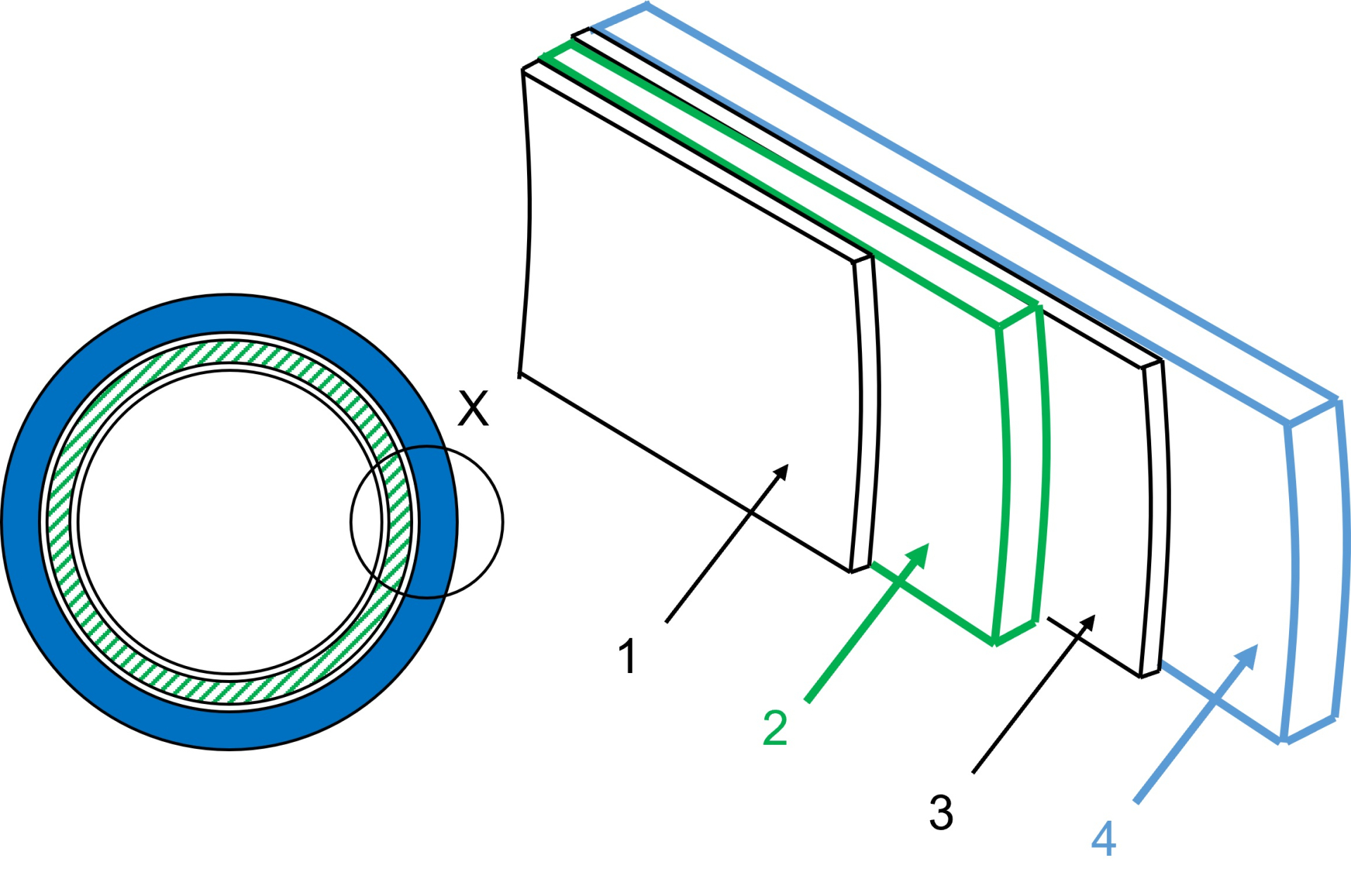
Schematic structure of the FW liner: 1= inner protective layer (permanent inner film or inner tube); 2= laminate (glass scrim impregnated with resin); 3= outer protective layer (outer film or outer tube); 4= existing pipeline
After various investigations, the experts identified an industrial resin that is available on an industrial scale and can be used in liner production. Finally, the researchers in the project succeeded in developing the basic elements of a GRP pressure hose liner suitable for district heating (resin, glass fibre scrim and protective film). They were able to successfully test the resulting prototype in the laboratory.
FW-Liner already installed in several German district heating networks
In collaboration with the municipal utilities and the city of Neumünster, the project partners have set up a test section operating in parallel with an existing district heating network. There, they tested an initial prototype of the FW-Liner in real-world conditions and under construction site conditions, and identified specific development needs.
Trial operations with a carbon fibre liner have shown that it can withstand the high temperature and pressure demands of district heating pipes, even under extreme thermal stress – ranging from freezing point up to 110 degrees Celsius. Since then, the carbon fibre liner has already been installed in several German district heating networks, such as in Aachen, Nuremberg and Frankfurt am Main.
The liners are integrated into jacket pipes for installation. Tests with the liners have shown that they expand more rapidly than the surrounding pipes. This results in material displacement in both carbon fibre and glass fibre liners. Thanks to the ‘web’ structure and the precise mixture of materials used, this is optimised to match the target expansion of the steel pipe. This means that with both liners, displacements may occur that do not correspond to the steel medium pipe. For the glass fibre components, this adjustment is more complex during development. The team of experts is currently working on a solution for this. With the liner developed by CarboSeal, no relative displacements occur.
The challenge of branch connections
Until now, the trenchless renovation of district heating pipes using on-site curing pipe liners has only been possible for undisturbed pipelines. No further pipes branch off from these. However, particularly in city centres, house connection pipes – so-called branch connections – can theoretically branch off from almost any section of the pipeline.
In the SaniFern project, the experts have investigated how these can best be integrated into existing pipes. They have already successfully tested the newly developed seals for the branch connections under laboratory conditions. They have now also integrated these into the test section in Neumünster. The main challenges here are the material displacements described above. The new elements will be optimised in practice by the end of the year.
Requirements catalogue for district heating liners drawn up
A short-term renovation places different demands on a liner than a project designed to extend the service life by several decades. The SaniFern team has drawn up a test catalogue for district heating network operators that sets out the requirements for district heating liners, regardless of the manufacturer. This will be published shortly. The following applies to all liners: they must not alter the chemical composition of the district heating water through abrasion or flaking, and must withstand the pressure and temperature conditions specified by the manufacturer.
District heating networks operated more efficiently with asset management tools
What is the condition of individual network sections? Where is maintenance due in the near future? Are there any leaks? Asset management tools capture these and many other aspects relating to district heating pipes. They help operators to manage, monitor and optimise their infrastructure. This covers the entire lifecycle of the systems – from planning and operation through to maintenance and renewal. In the ongoing Sustainable Asset Management District Heating (SAM-FW) project, researchers are working to further develop existing tools for heating networks.
Among other things, they are relying on artificial intelligence to enable predictive maintenance. This means that it analyses large volumes of operational and sensor data to monitor the condition of machines and systems in real time and predict when action is required. “This allows operators to plan their maintenance more efficiently. As a result, unplanned downtime and high repair costs are reduced,” says project manager Stefan Hay of AGFW, the Energy Efficiency Association for Heating, Cooling and CHP.
The partners have published further aspects and findings from the project in the study “Sustainable Asset Management in District Heating – aktueller Stand und zukünftige Entwicklungen”. This provides detailed, scientific insights into
- Maintenance & asset management of district heating networks
- Predictive maintenance
- Life-cycle assessment and circular economy of district heating networks
- Key performance indicator systems for the asset management of heating networks
as well as their further development over the remainder of the research project. The results are being tested in real-world heating networks and are intended to be incorporated into technical standards in the long term. The SAM-FW research project is part of Annex TS 6 of the International Energy Agency’s (IEA) District Heating and Cooling Technology Initiative.