 © PTW, TU Darmstadt
EISKIG project
AI control improves energy efficiency in industrial cooling
Fluctuating electricity prices and weather conditions, as well as varying heat requirements in production, significantly affect the operation of industrial cooling systems. Nevertheless, conventional operating modes rarely take them into account. The recently completed EISKIG project addresses this issue.
The target was defined at the start of the project: the implementing companies wanted to save at least 15 percent of energy in their cooling supply systems. Participants included drive and control technology provider Bosch Rexroth, pharmaceutical company Merck, and data centre and interconnection services provider Equinix. These companies aim to reduce their energy costs and CO₂ emissions. To this end, they are relying on AI methods in the EISKIG project, which was launched in 2022. These methods support predictive and demand-oriented operation of the cooling supply system. Technical expertise for this project was provided by TU Darmstadt, the software developer etalytics, and the engineering and consulting company ETA-Solutions.
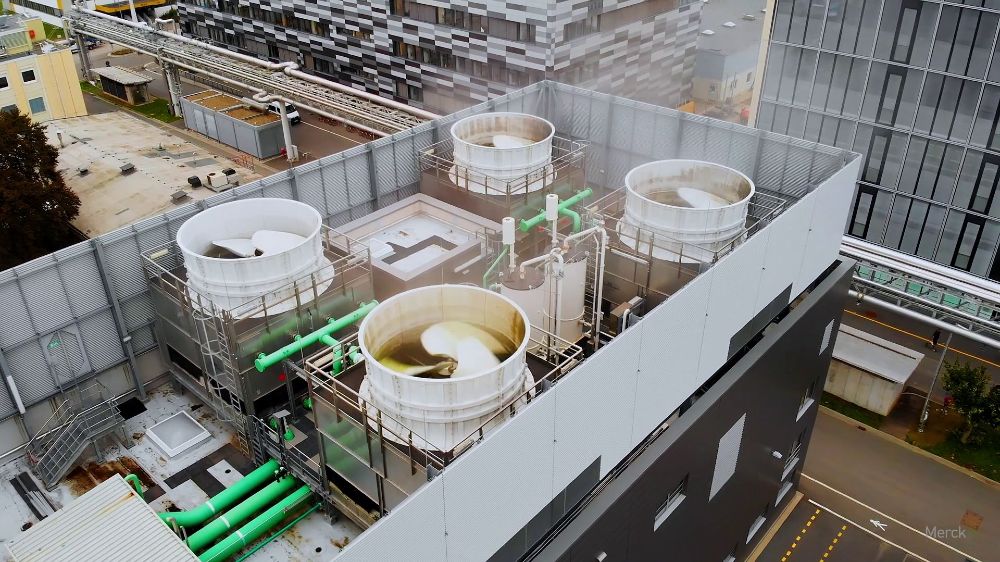
Practical application requires a digital twin.
“Before transferring the system to the real installation, we first create a digital twin of the plant. This must demonstrate stable and reproducible behaviour in a variety of scenarios,” says project coordinator Tobias Lademann from TU Darmstadt.
Realistic simulation models are required in order to develop and test efficient operating modes under dynamic boundary conditions. To this end, the researchers combine technical specifications and measurement data and supplement them with temporary measurements. Lademann: “Data quality is crucial here: incorrect or missing data must be identified and corrected.”

To successfully optimise the system, the researchers are relying on deep reinforcement learning, among other things. Here, an agent learns which operating strategy is most effective by interacting with a simulation environment. A neural network maps the agent's decision-making logic. It selects plant control variables based on the current system status. Reward signals, based on energy consumption, CO₂ emissions, or wear and tear, guide the learning process of the neural network. Continuous adaptation results in effective control behaviour. The system status includes a variety of sensor data, such as temperatures, storage conditions, or volatile electricity prices. Integrated forecasts enable proactive action.
Dashboards show where action is needed
Where can efficiency gains be achieved? How complex is it to implement the system? In which areas does optimisation have the greatest impact? Companies should clarify these questions before implementing an AI solution. “To speed up the process, we have introduced the Quick Scan method. This enables decision-makers to assess the potential for efficiency gains, prioritise options, and decide whether an investment in AI is worthwhile,” says Dr.-Ing. Philipp Schraml, Managing Director of ETA-Solutions.
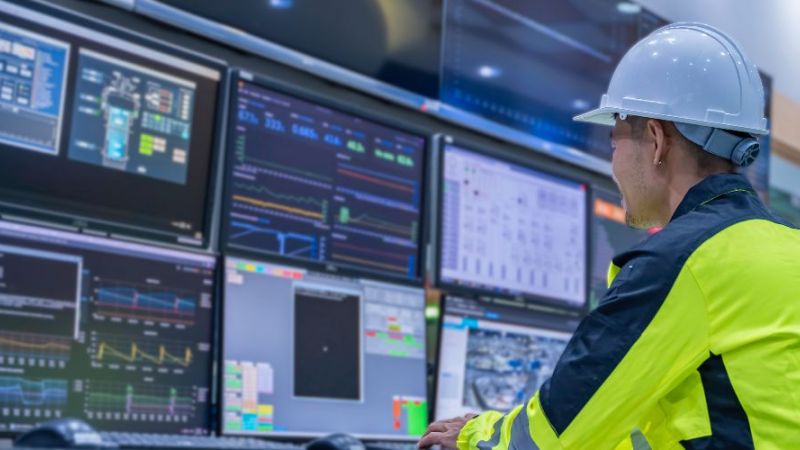
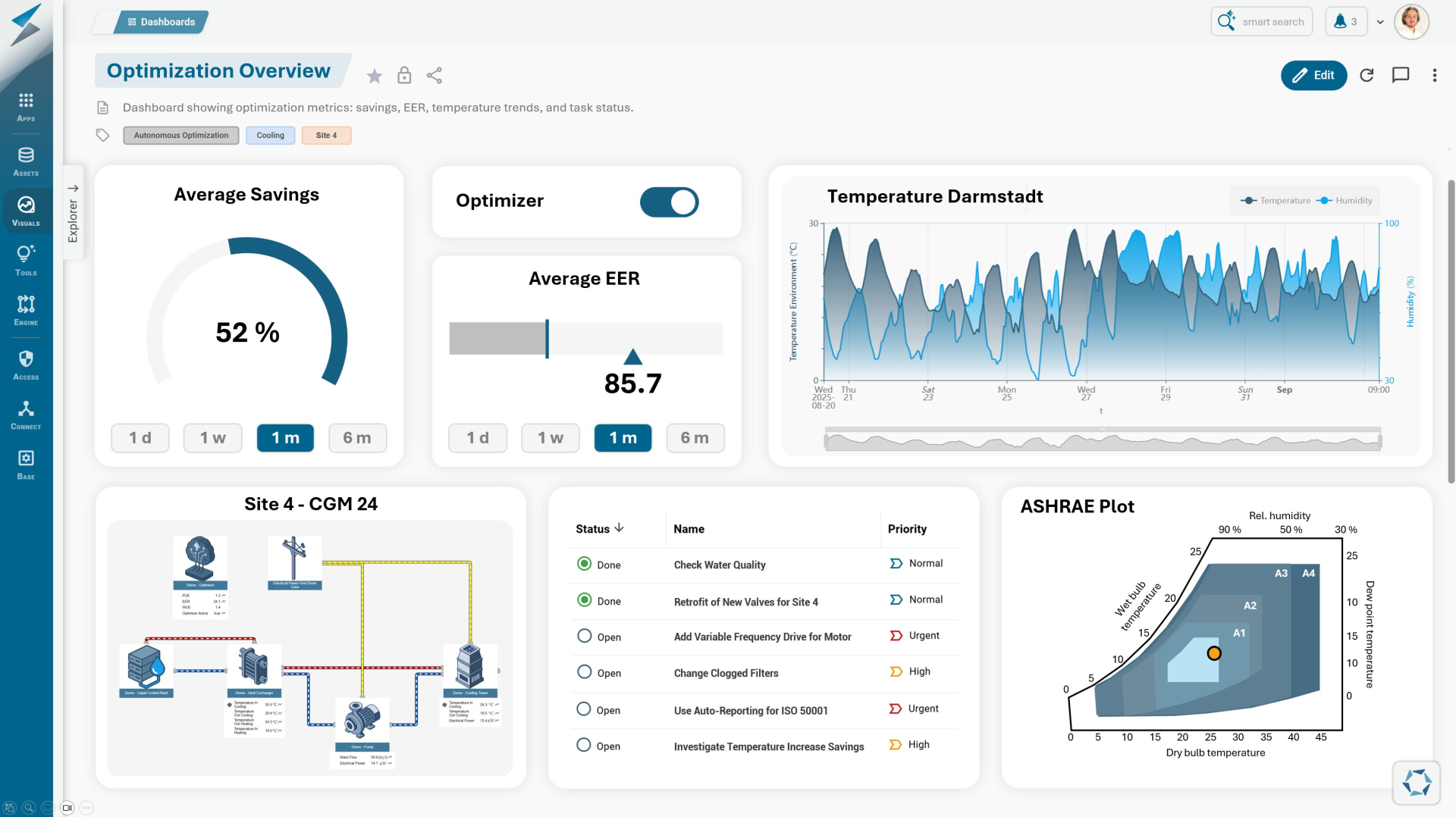
In addition, the partners in the EISKIG project have developed dashboards that convert complex data, such as AI-supported operational optimisation, into clear visualisations. They show where action is needed, how progress is evolving, and what impact the measures are having.
“We have decided to transfer the AI applications to other existing energy systems and integrate them into future projects as early as the planning phase.”Jeannette Wiesner, coordinator of the EISKIG research project at Merck
Behind this is the AI-based energy management platform etaONE®. It acts as a kind of conductor, using a digital representation of the system to learn from operating data, recognise patterns, predict demand, and continuously optimise operating modes. The platform thus provides data-driven recommendations for the control values of the respective cooling supply system, thereby gradually improving efficiency and reducing CO₂ emissions without disrupting the existing infrastructure.
At least 20 percent energy savings in cooling systems
Thanks to the AI-optimised control system developed in the EISKIG project, the pharmaceutical company Merck has increased the efficiency of the cooling systems used in the project. Compared to conventional control systems, the AI-optimised system reduced electrical energy consumption by 21 percent in the first three months of operation. During test runs, consumption was up to 36 percent lower for the pump group and up to five percent lower for the cooling towers.
“The savings achieved exceeded our expectations. The implementation took place without interrupting the required 24-hour operation of our cooling system. We have therefore decided to transfer the AI applications to other existing energy systems and to integrate them into future projects as early as the planning phase,” said Jeannette Wiesner, coordinator of the research project at Merck.
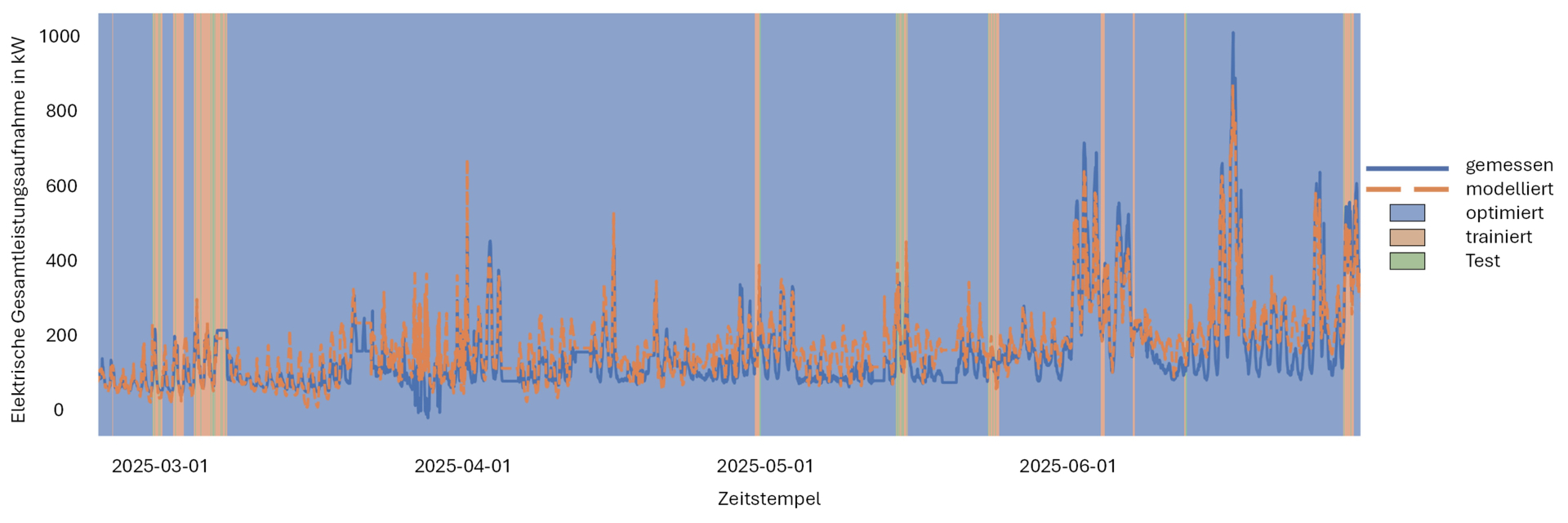
Power consumption of the system under consideration when operating the AI-optimised control system at Equinix (Germany) GmbH

Electrical power consumption of the pump group and cooling towers during test runs for commissioning the AI-optimised control system at Merck KGaA
Application partner Equinix also reduced its electrical energy consumption by at least one fifth in the application area under consideration over a period of approximately four months thanks to AI-optimised operation. The AI control system was only active 76 percent of the time. It can be assumed that even greater savings would be achieved with 100 percent activation. At Equinix, the AI-optimised control system had a particularly positive effect on energy consumption through the optimised use of free cooling in combination with adiabatic cooling.
Bosch Rexroth: Control parameters for AI optimisation
The Bosch Rexroth plant in Schweinfurt produces components for linear technologies. Grinding, hardening and drilling are also required in their manufacture. These processes have high cooling requirements. To meet these requirements, cooling towers, refrigeration units, and the associated pumps require a lot of energy. Possible control parameters for the AI system include, for example, the mass flows and flow temperatures of the cooling towers and heat exchangers in order to maximise the cooling capacity provided. The partial load capacity of the compression refrigeration units is also suitable for AI optimisation. "We expect savings of 15 percent and more in long-term operation. If this is confirmed, we plan to introduce the solution in our international plant network," says Isabella Stamm from Sustainability Management at Bosch Rexroth.
The AI system developed in the EISKIG project is not tied to a specific system type. It can also be used for ventilation systems or heating networks. Its application beyond the pilot project is already underway.