 © ASCA GmbH & Co. KG
Organic photovoltaics (OPV)
From research to production: How organic PV modules can be produced more cost-effectively
Organic photovoltaic modules are true specialists. Although they generate less electricity than conventional silicon modules, they excel in terms of light transmission and design. Researchers working on the ‘Durchblick-PV’ project have demonstrated how this is achieved and how it can be implemented cost-effectively in production.
Whether glass facades, greenhouses or car windows: these wafer-thin, light-transmitting photovoltaic films are an attractive solution for these applications. The focus here is on design flexibility, integration and transparency, rather than on high efficiency. After all, the window fronts of office buildings need to remain light-transmitting despite generating electricity. In greenhouses, daylight is essential to ensure that strawberries or tomatoes thrive beneath the solar panel roofs. At the same time, electricity is generated to power the sprinkler system.
 © Heraeus Epurio GmbH
In the ‘Durchblick-PV’ research project, experts set out to develop organic photovoltaic modules with a high degree of transparency in the visible spectrum, ideally exceeding 60 percent. A further focus was on using new research findings to reduce manufacturing costs, followed by the rapid integration of the resulting material and technology optimisations into production. “Rapid transfer of results to the market is essential for remaining competitive as a commercial enterprise,” says project coordinator Dr Wilfried Lövenich, Head of R&D Clevios at Heraeus Epurio. “We have succeeded well in this regard in the Durchblick-PV project.”
“Rapid transfer of results to the market is essential for remaining competitive as a commercial enterprise.”Project coordinator Wilfried Lövenich
From materials research to a mock-up facade
 © Fraunhofer ISE
Firstly, the research team at Durchblick-PV tested various organic absorber materials for their optical and electrical properties and optimised them for use in cells and modules. Furthermore, visually transparent and NIR-reflective substrate electrodes were further developed with a view to optimising costs and improving electro-optical properties. Similarly, highly transparent and highly conductive polymer-based materials for the back electrode were successfully further developed and implemented.
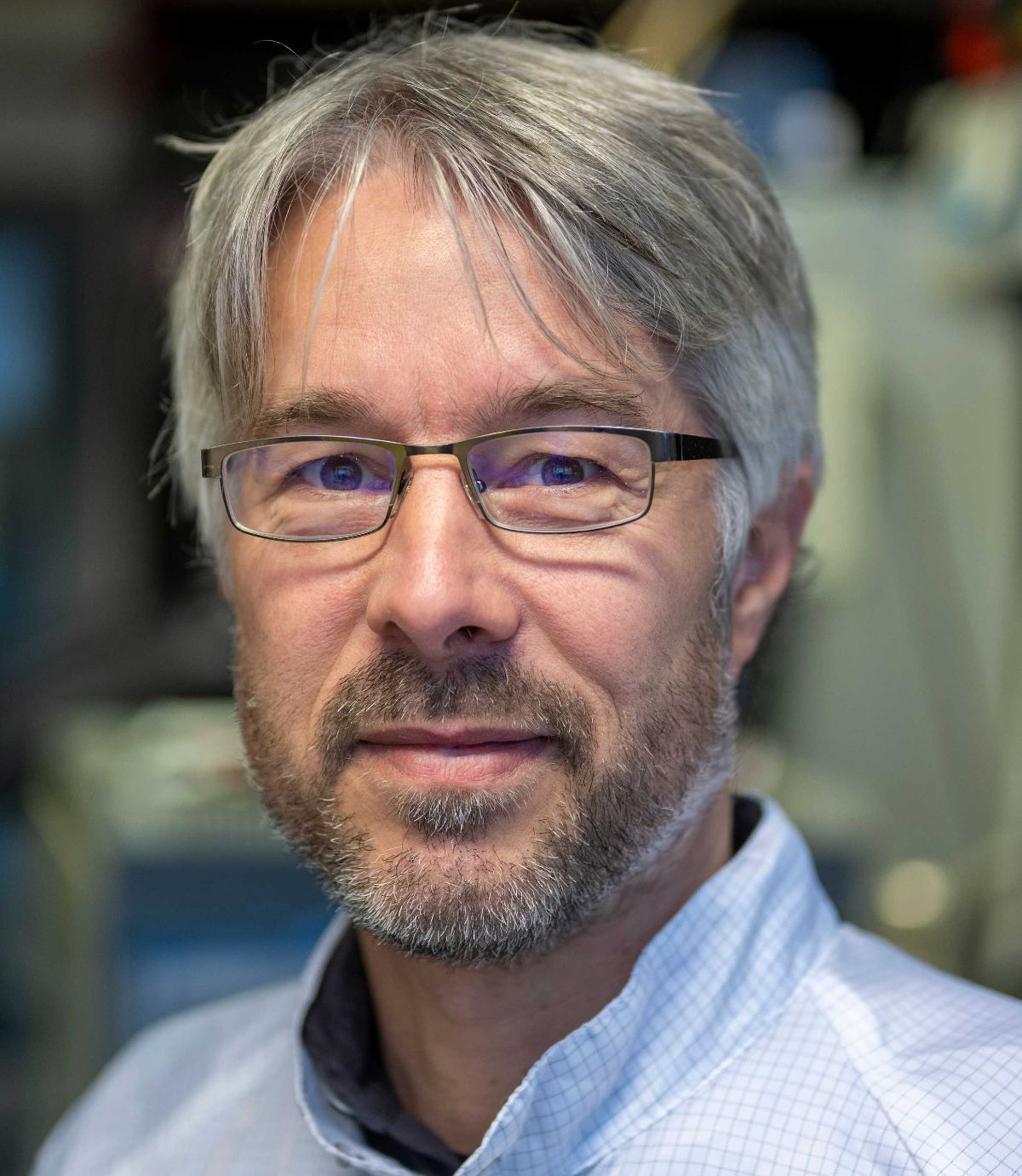
At the Freiburg Materials Research Centre (FMF) at the University of Freiburg and the Fraunhofer Institute for Solar Energy Systems (ISE), promising values for efficiency and transmission were thus achieved. “By combining the improved polymer front electrode with highly precise laser structuring, we succeeded in producing the modules without any metal in the front electrode. This has significantly improved both the transparency and the uniformity of the appearance,” explains Dr Uli Würfel, Head of Department at Fraunhofer ISE.
“We have succeeded in producing the modules without any metal in the front electrode. This has significantly im-proved both the transparency and the uniformity of the appearance.”Project partner Uli Würfel
 © ASCA GmbH & Co. KG
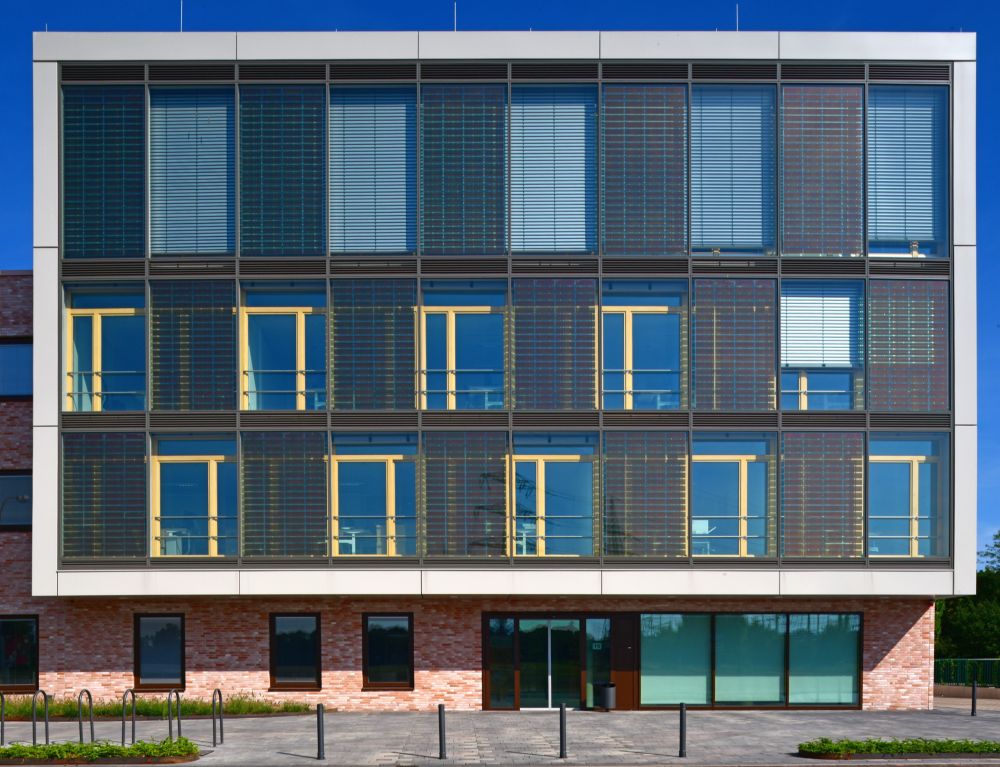
Finally, the experts at ASCA scaled up the optimised overall system to create large-area organic solar modules. Polycarbonate laminates were produced using these modules, and a transparent mock-up was constructed from them. The demonstrator remains in a test field to this day and is providing data that is continuously being analysed. This enables insights to be gained for further optimisations.
Key to success: the partnership between industrial companies and research institutions
The right mix of partners was crucial to the success of the research project. Alongside materials researchers from the Fraunhofer ISE, the University of Freiburg and Heraeus Epurio, the team included ROWO Coating – a specialist in the roll-to-roll metallisation of films – and ASCA, a manufacturer of organic solar modules. This enabled new research findings from the workshops and laboratories to be tested directly for their suitability for production.
“Above all, our customers want an attractive visual appearance at a reasonable cost.”Project partner Sebastian Meier
Although the desired physical values for high transparency were not quite achieved in the Durchblick-PV project, the researchers did develop several cost-reducing processes and technologies for OPV manufacturing. These findings are extremely relevant for bespoke OPV products. After all: “We hear time and again from interested parties that the focus is not necessarily on achieving maximum values for the physical parameters. Above all, our customers want an attractive visual appearance at a reasonable cost,” confirms Dr Sebastian Meier, Director of OPV Technology & Manufacturing at ASCA. The company, based in Kitzingen near Würzburg, claims to be the world market leader for OPV modules.
Transparent PV: A best-practice example of cost reductions in OPV manufacturing
The research project is a best-practice example of the rapid transfer of knowledge from research to production. For example, two innovative, cost-effective electrode concepts were developed. These are now being used in ASCA’s production. The project also identified a cost-effective PET film that is to be used as a substrate for the electrode layers in future production.
Costs can also be reduced through the use of the barrier film developed as part of the project, which is made from commercially available packaging films. These films can be customised depending on the specific application. The film concept has not only been successfully tested in the laboratory but also on a roll-to-roll scale. (it)