 © Fraunhofer IWES
Making sensible use of resources from old wind turbines
End-of-life rotor blades: recycling rather than incineration
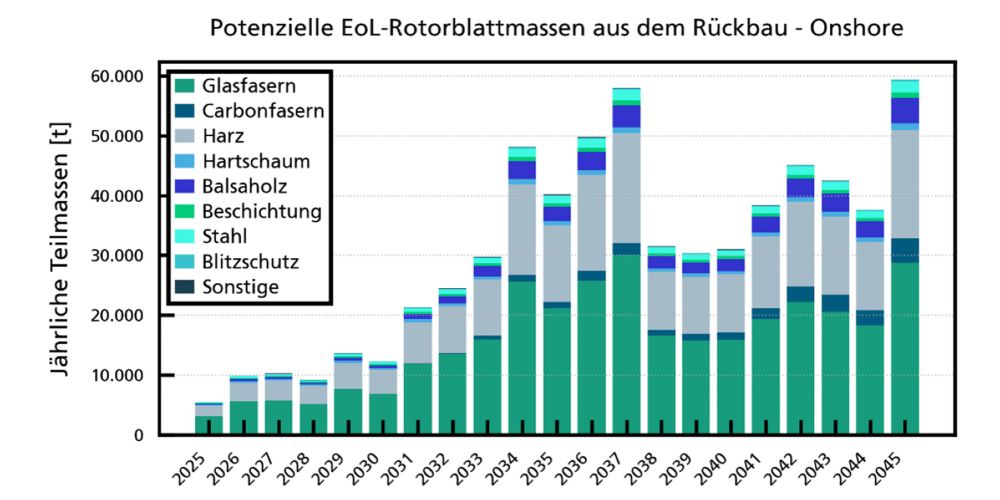
The volume of end-of-life rotor blades is set to rise significantly in the coming years. By 2050, around 30,000 tonnes of rotor blade waste are expected to be generated in Germany each year. Researchers are investigating various approaches to determine how the composite materials used in these blades can be recovered and put to good use.
In 2025, around 6,400 tonnes of rotor blades were dismantled from 554 turbines. The blades are mainly made up of high-strength fibre composites such as GRP or CFRP, consisting of glass fibres or carbon fibres bonded with resin. Currently, the standard practice is to cut up old blades, then shred them and finally send them to a waste-to-energy plant.
Another user is the cement industry. It incinerates the resin. The remaining glass fibres are then added as an aggregate in cement production. However, this is not a promising solution for the future: incineration or recycling within the cement sector is not very efficient. Furthermore, glass fibres clog the filters in waste-to-energy plants. Other components, such as PVC in older systems or carbon fibres in modern systems, must not be incinerated at all. Instead, they are already being treated in specialised pyrolysis plants to recover valuable fibres for further use.
The projects are therefore pursuing various approaches to high-quality recycling. The aim is the same: to establish a sustainable circular economy for these valuable composite materials.
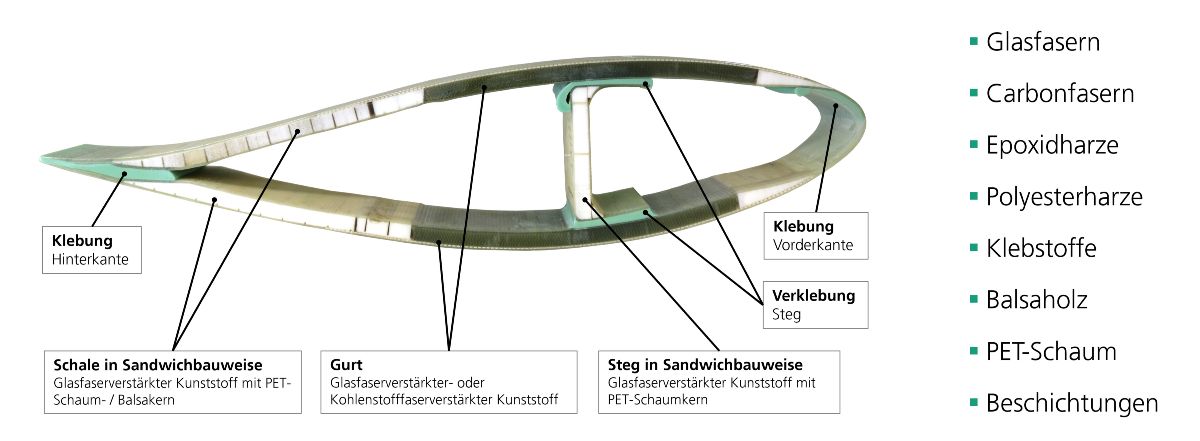 © Fraunhofer IWES
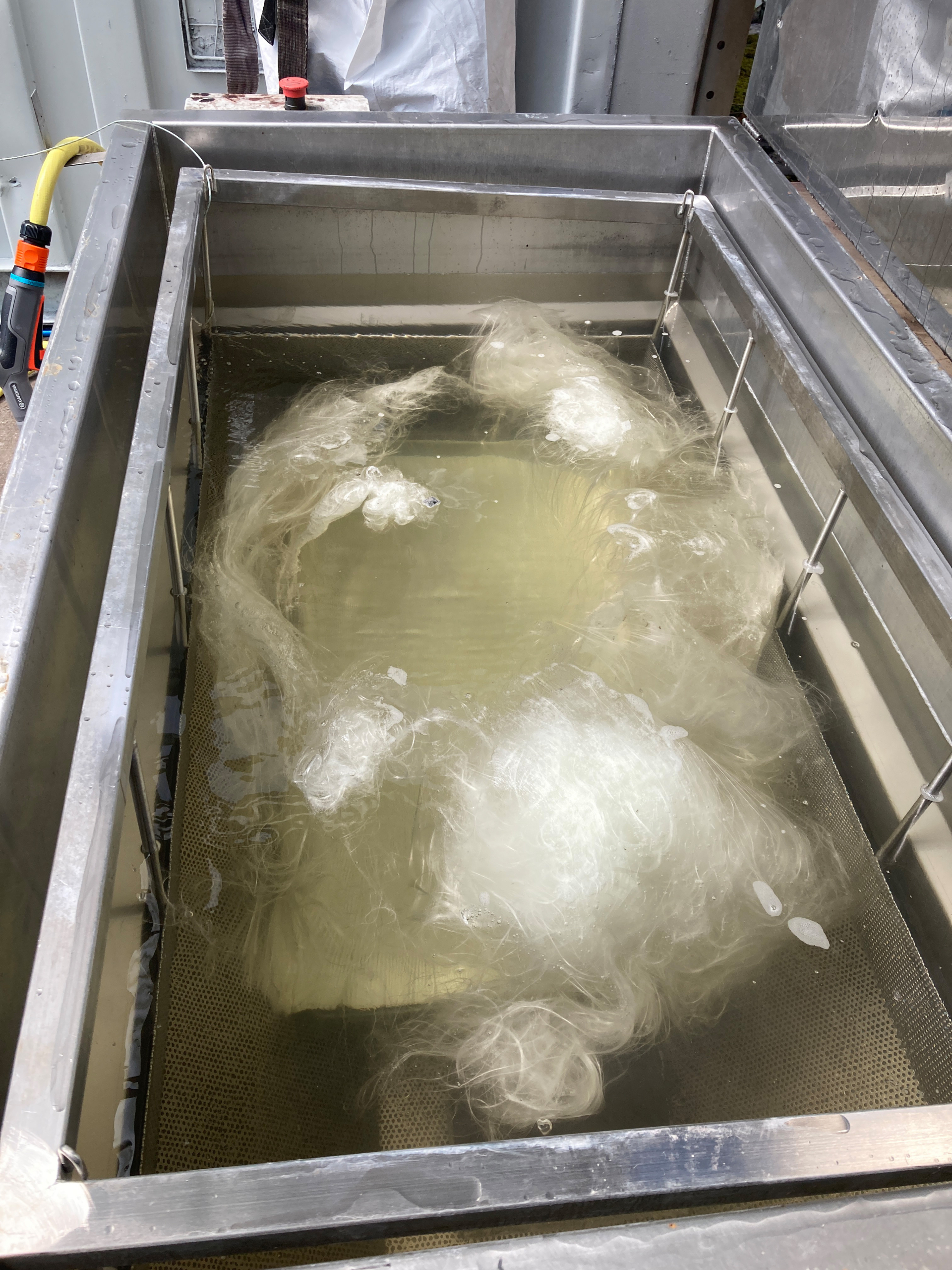
In the ReusaBlade project, the partners are focusing on rotor blades made from degradable resins. Siemens has already built the first rotor blades using what is known as ‘Recyclamine’, and these are currently in operation as offshore blades. “Even though these blades won’t need to be recycled for another 25 years, we at Fraunhofer IWES are already researching how this can be achieved in a practical manner,” says Niels Ludwig, Deputy Head of Systems and Components at Fraunhofer IWES, explaining the work. The chosen process for treating the blade components is solvolysis, in which the resin is chemically broken down.
Rotor blades of the future can be dissolved in an acid bath
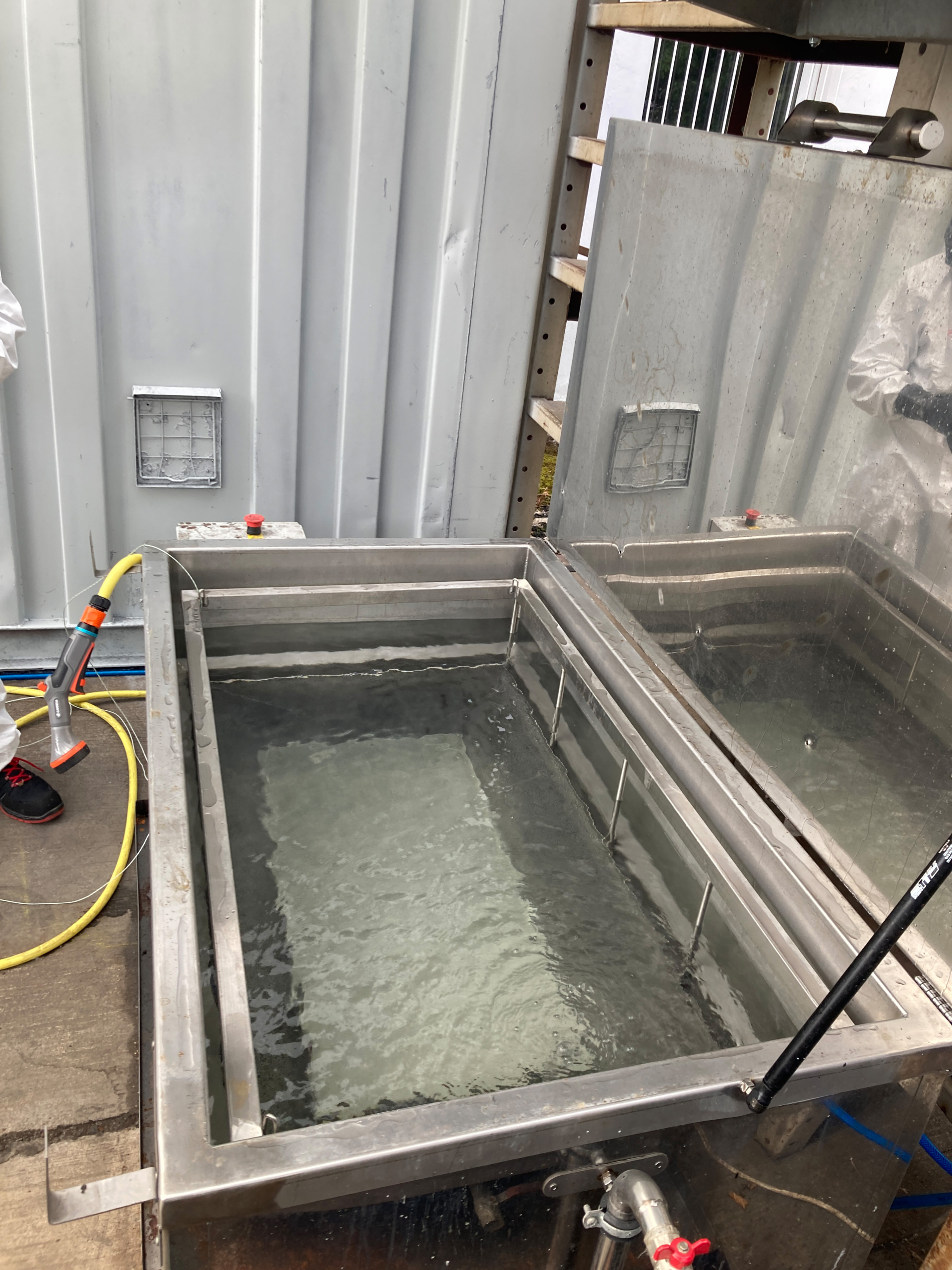
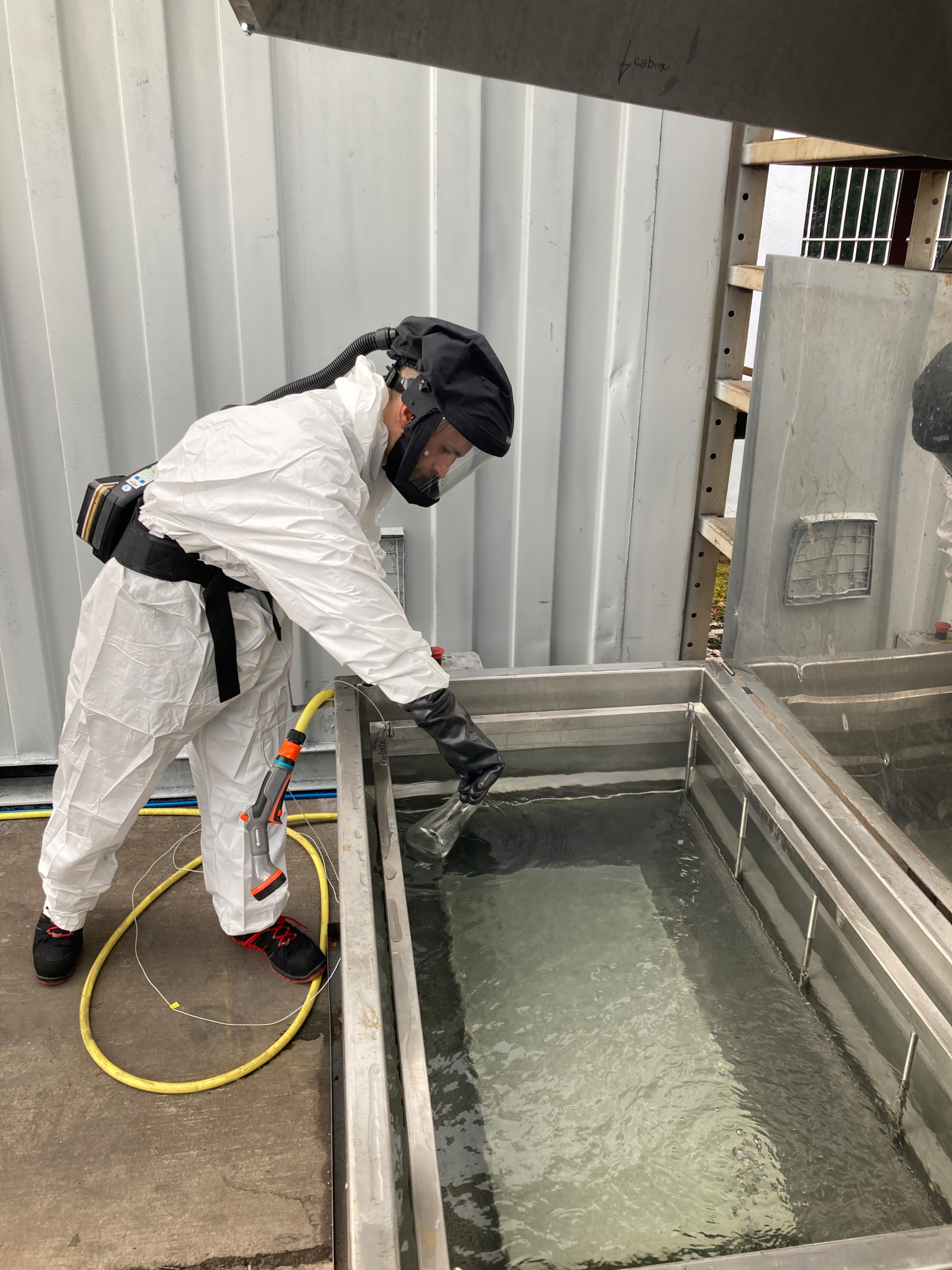
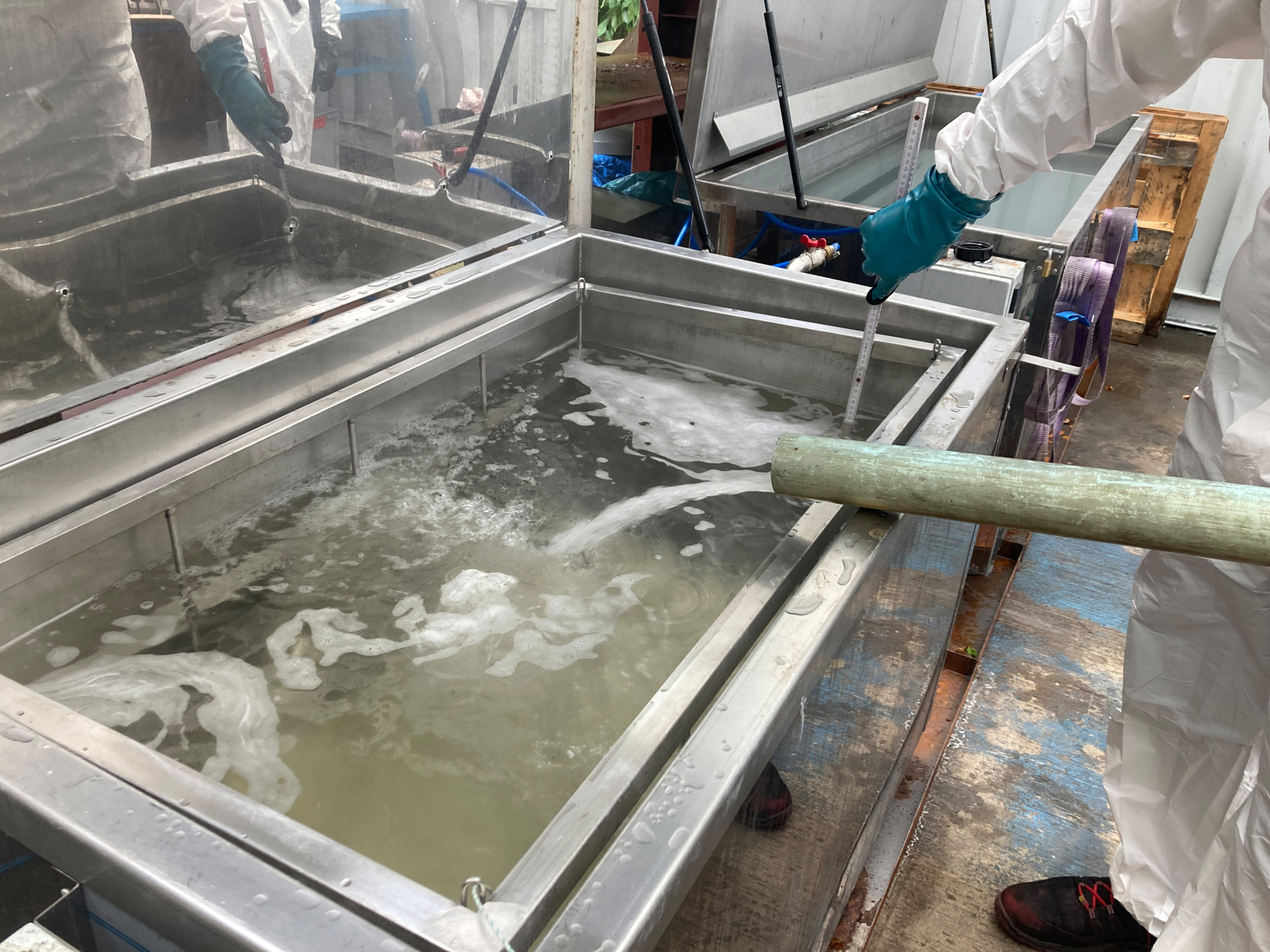
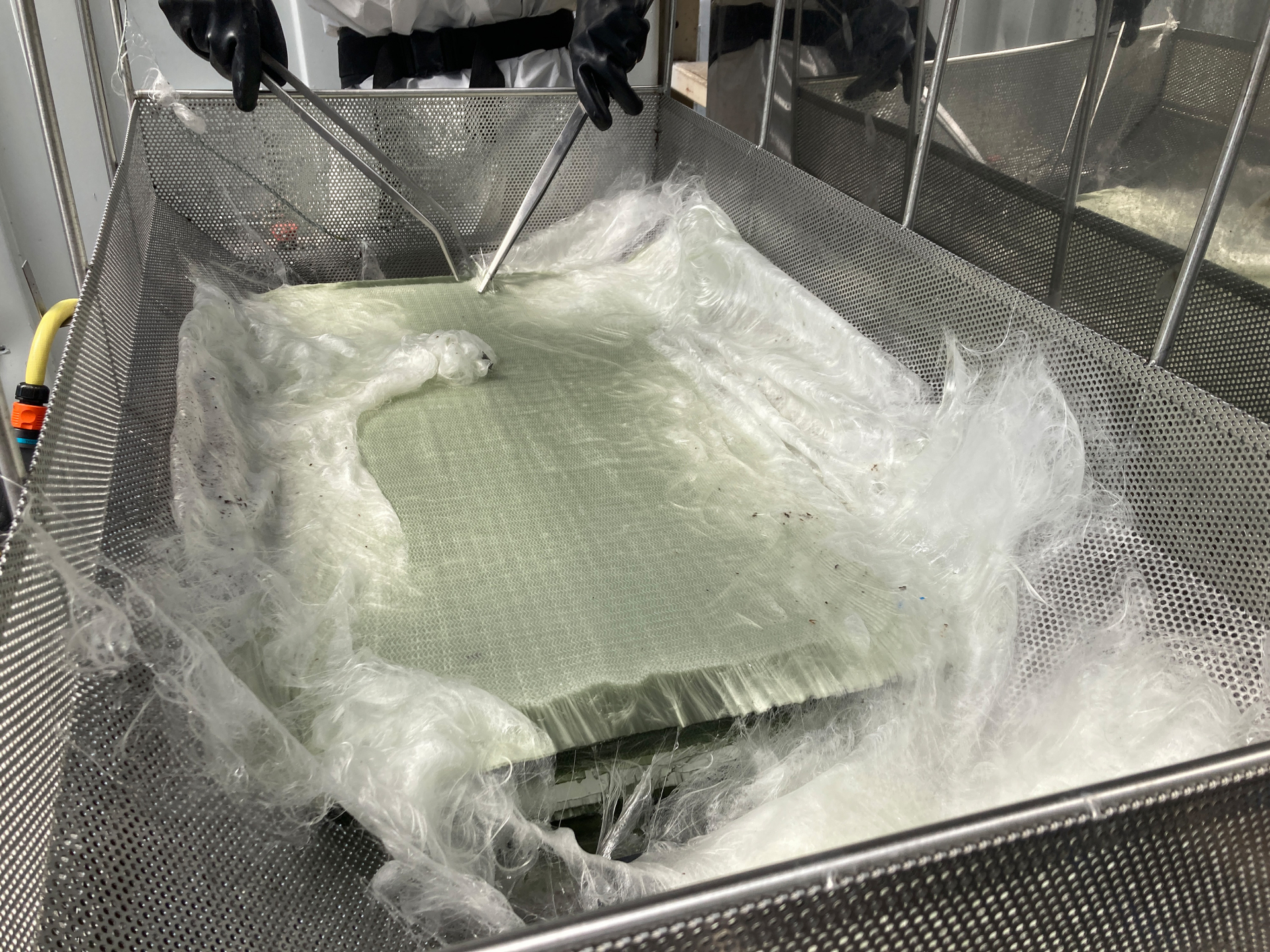
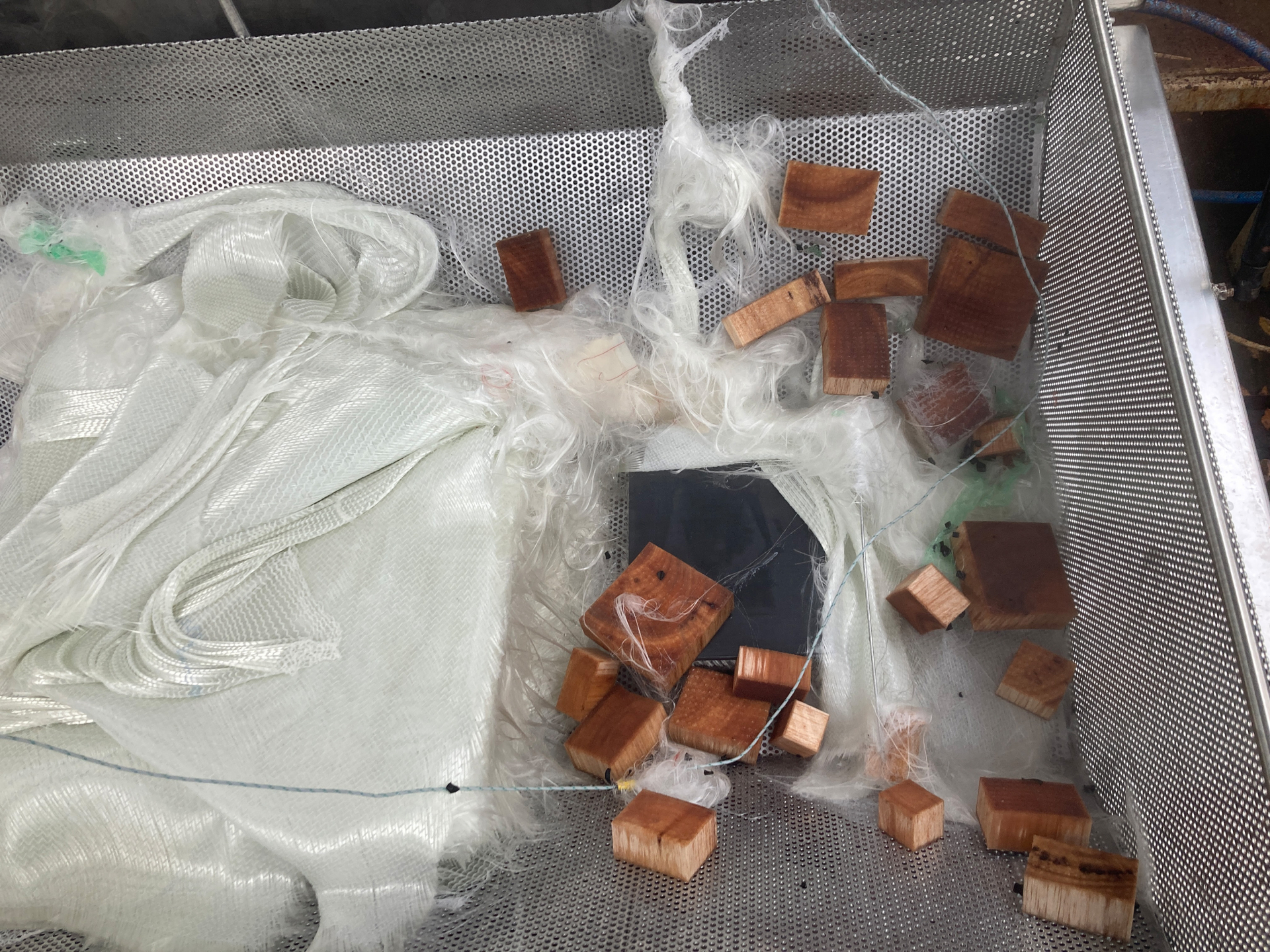
To investigate how the material behaves during solvolysis, the scientists at Fraunhofer IWES first manufactured the relevant rotor blade components at the BladeMakerCenter – before dissolving them in an acid bath. The result: “The fibres and the sandwich material emerge from the process in a 1:1 ratio and can therefore be reused with comparable properties,” reports Niels Ludwig. The resin from CTP GmbH dissolved completely at 80 degrees in 50 per cent acetic acid and settled at the bottom after neutralisation. The only drawback was the strong odour given off by the acetic acid during the dissolution tests, which lasted several days. The researchers therefore switched to a mixture of phosphoric acid and citric acid. Whilst the tests carried out so far have involved slender components approximately one metre long and up to 0.5 metres wide, trials with larger components are due to take place shortly.
Carbon fibres as a valuable recycled material from modern plants
The RE_SORT project focuses on the recovery of rotor blades containing the chemically insoluble resins that have been standard practice to date. In doing so, the researchers are also addressing the increasing proportion of carbon fibres in composite materials. These have significantly higher strength and are lighter than glass fibres. Because the production of carbon fibres requires a great deal of energy and is therefore very expensive, they are of particular interest for recycling.
The Fraunhofer IFAM work package is dedicated to microwave pyrolysis. The researchers anticipate high added value: Although electrical energy must be applied, this saves on the highly energy-intensive production of new carbon fibres, according to Dr Ralph Wilken of Fraunhofer IFAM, Head of the Surface Technology Division and coordinator of RE_SORT. In the long term, the technology is intended to be integrated into a continuous-flow plant through which the carbon fibre strips from the rotor blades are fed.
During experiments on a large microwave, the researchers can move the components to simulate a continuous production process – enabling components up to 60 centimetres in length to be treated. “Although this is still an experimental setup, carbon fibres as long as 60 centimetres are already of interest for recycling,” says Dr Jörg Ihde, Head of the Department of Plasma Technology and Surfaces at Fraunhofer IFAM. “Our aim is for the exposed fibres to retain their original orientation and arrangement, so that we can directly re-impregnate them with a resin and use them to produce a new component with good mechanical properties.” Initial samples are currently being analysed by the project partner, Fraunhofer IWES. Strength analyses of the recovered carbon fibres confirm that their strength values are virtually identical to those of fibres from the original material.
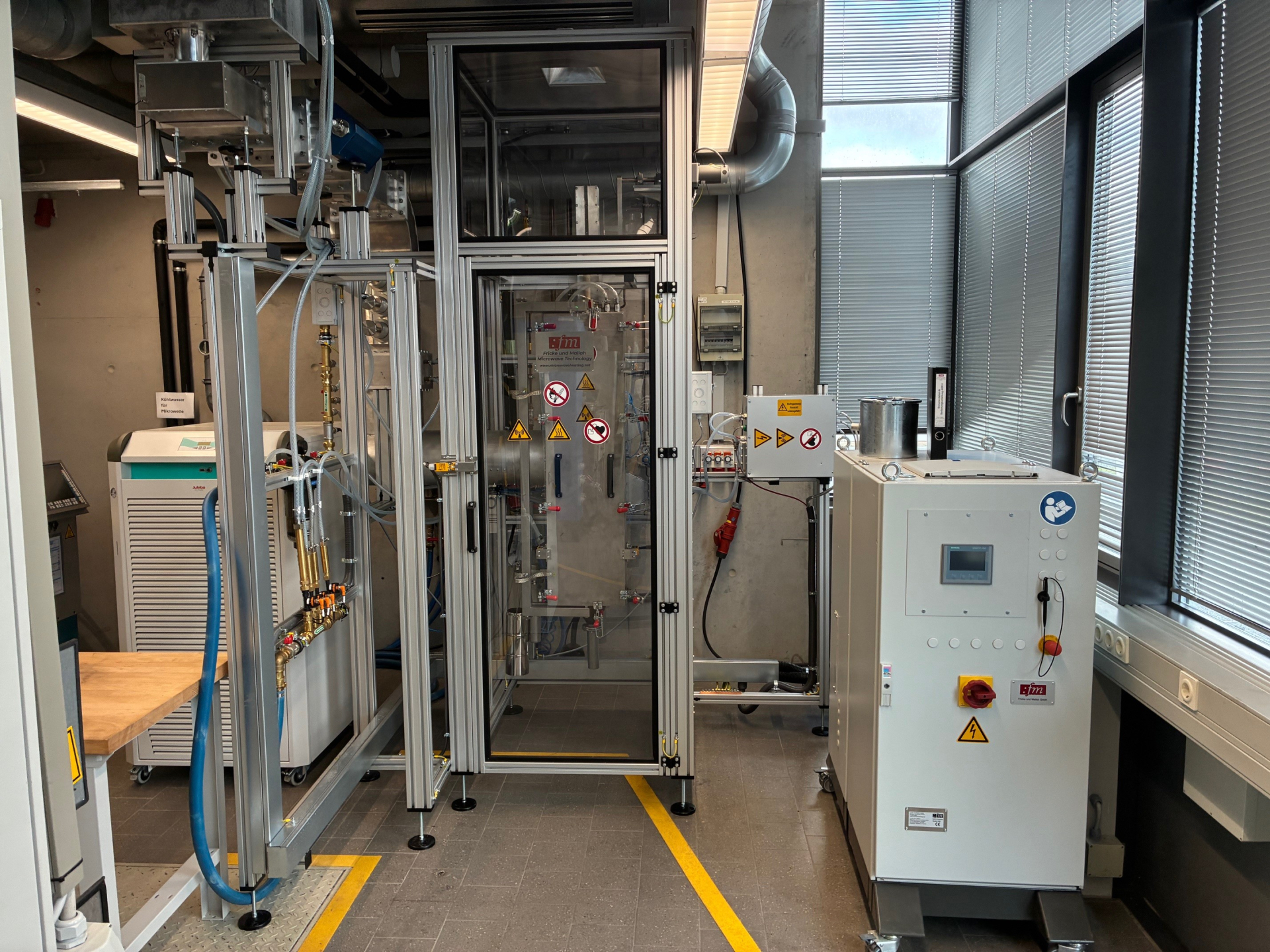
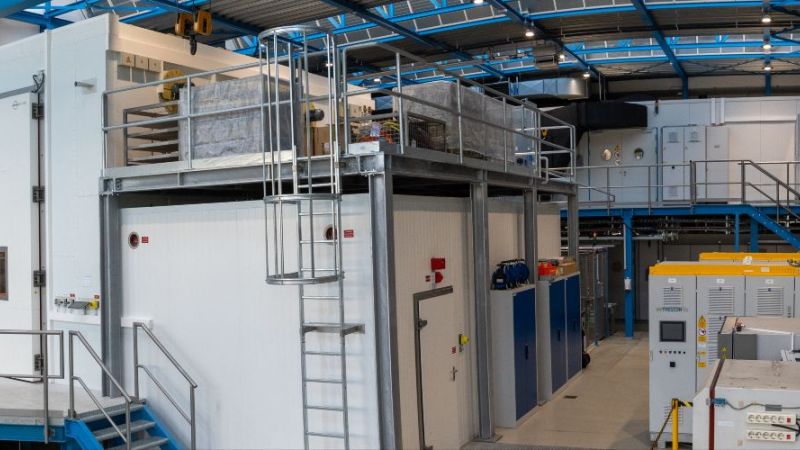
Microwave pyrolysis plant with the generator on the right and the cooling system on the left
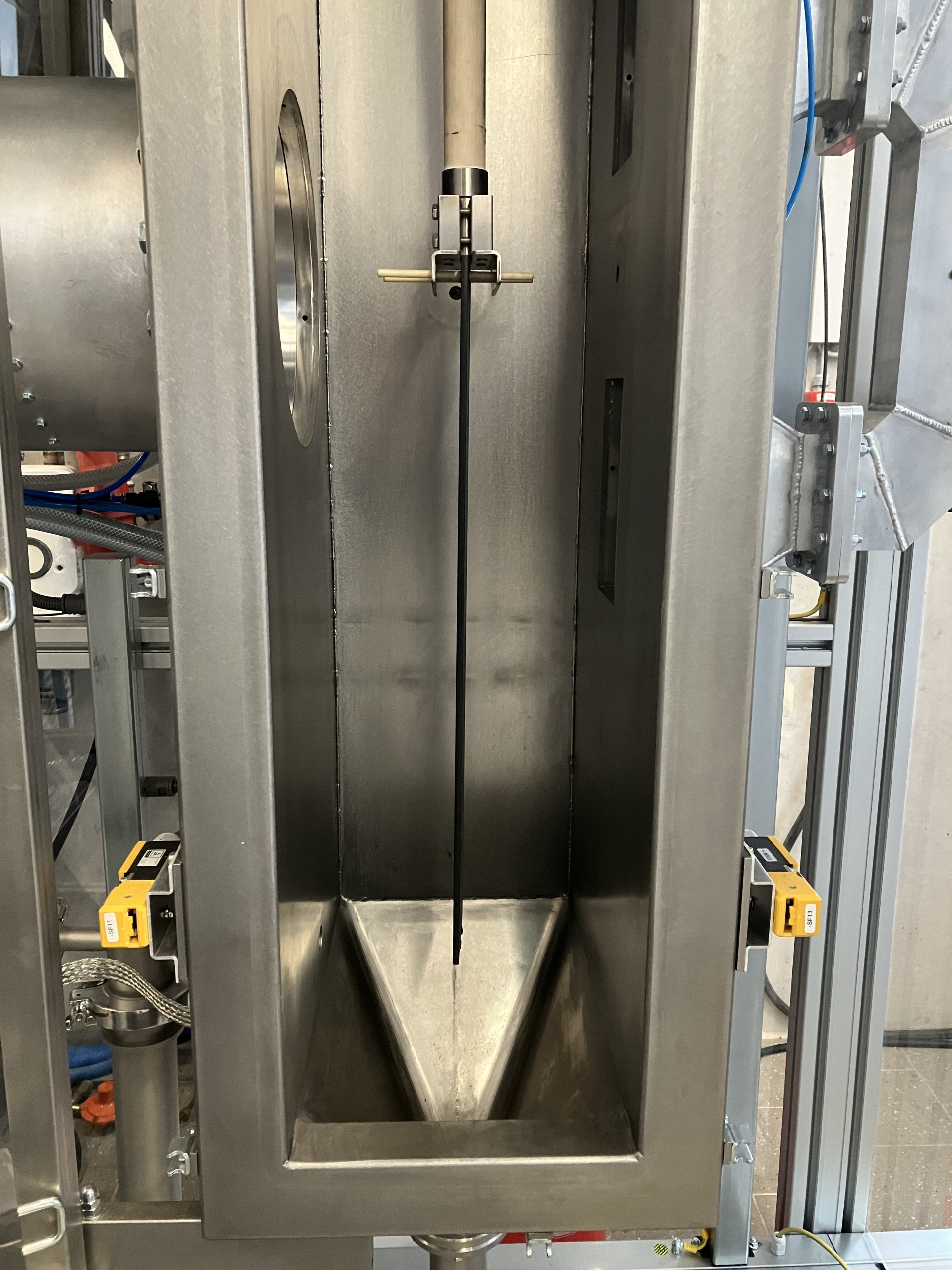
CFRP panel / sample prior to treatment in the microwave pyrolysis unit
“If we can manage to slowly separate the carbon fibres from the composite matrix during pyrolysis and then use a technology to wind them up in such a way that we can process them again, then reuse is genuinely truly possible straight away.”Dr Jörg Ihde, Fraunhofer IFAM
Batch pyrolysis is the method of choice for urgent recycling needs
The project partners, the Institute for Energy and Circular Economy at Bremen University of Applied Sciences GmbH (IEKrW for short) and the company BioProdukt Uthlede GmbH, are conducting parallel research into thermal batch pyrolysis. To this end, the researchers have set up a prototype plant comprising three interconnected treatment chambers with a total reactor volume of 24 m³, designed to pyrolyse large sections of rotor blades. From an energy perspective, the process offers advantages over microwave pyrolysis. Batch pyrolysis runs virtually continuously through coordinated processes in three chambers: whilst the pyrolysis gases produced in one chamber are converted into electricity, the waste heat generated in the process is directly utilised to drive the next pyrolysis cycle. This process thus enables not only fibre recovery but also the generation of electricity and pyrolysis oil. Within the RE_SORT project, the partners are jointly investigating the strength achieved by test components made from glass and carbon fibres that have been recovered from the pyrolysis processes and re-infused with resin.
The ReWert project, launched in July 2026, closes the loop: it lays the foundations for a recycling centre for rotor blades. The aim is to recover all the materials used in the blades, sorted by type. The focus here is on rotor blades built 25 years ago or more, which are due to be recycled. The resin in these blades is virtually chemically insoluble, while the blades consist mainly of glass fibres. The chosen process for separating the composite materials is therefore batch pyrolysis, which is being further developed in ReWert based on the findings from the RE_SORT project.
Identifying material boundaries and sorting by type using thermography
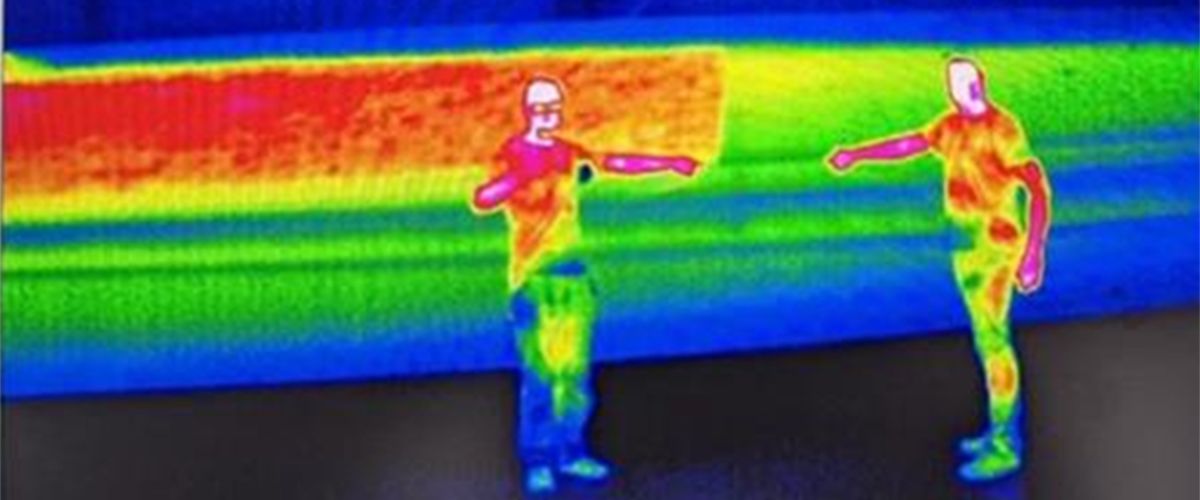
Proper preparation for recycling is fundamental to the ReWert project: “We don’t simply saw off a section every 12 metres; instead, we plan targeted cuts,” explains Lisa Schudack, project manager at Fraunhofer IWES: “The challenge is that the rotor blades arrive at our facility coated. This means the material boundaries are not visible to the naked eye.” The researchers therefore use thermography. The rotor blade is first heated. Due to the different thermal conductivities of the materials, the cut edges can be clearly visualised. In a subsequent step, these are to be marked automatically. At the end of the project, a demonstrator for a dismantling centre will initially be produced, which can serve as the basis for the construction of larger facilities.
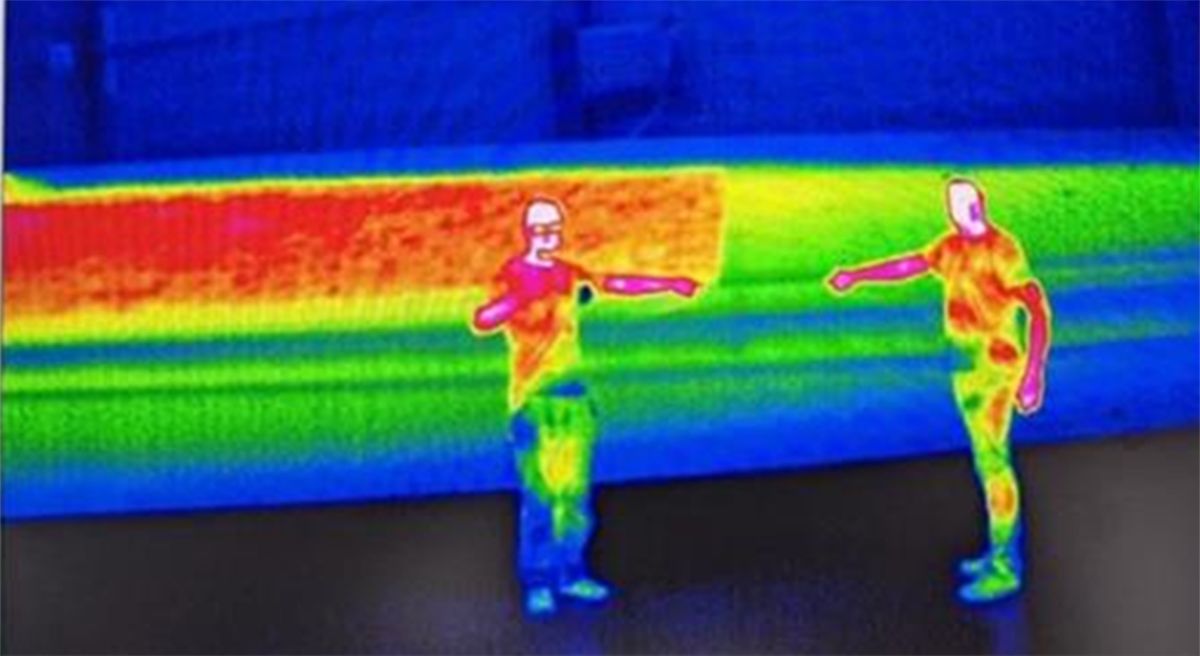 © Fraunhofer IWES
For this work, the project team is using rotor blades supplied by the project partner and wind turbine manufacturer Enercon. The thick-walled sections of the rotor blade are intended for subsequent thermal batch pyrolysis, whilst the sandwich sections are to be separated individually depending on the core material. The project partners will then examine all the materials contained within the blades to assess their potential for further recycling, including the glass fibres, the pyrolysis oil, the PET foam – or, in the case of older turbines, PVC foam – and the balsa wood. For all these materials, the question arises as to the best possible recycling options and the most suitable processes. “The shredded PET from the rotor blade, for example, contains residues of resin and fibre particles. The question here is to what extent it is still suitable for the intended process,” says Niels Ludwig of Fraunhofer IWES, citing an example from the numerous work packages.
Objective: Recycling rather than incineration already stipulated in tenders
“We are also planning a cost model in which we analyse the costs for each step – for example, energy, material and labour costs. Our aim is to arrive at a specific figure for recycling so that we can make a direct comparison,” concludes Lisa Schudack. Operators need an incentive to adopt the new processes. According to the researchers, it is they who would ultimately have to bear the costs. “Our hope is that if we can show we can stay within budget, recycling will be specified in the tenders,” explains Niels Ludwig. Incineration results in valuable raw materials being irretrievably lost. (mb)