 © Sunisa – stock.adobe.com
Resilience
Preparing the energy system for extreme stress situations
Dr. Bert Droste-Franke Mission Energy System
Extreme stress situations are not uncommon for the energy system and are likely to increase further. These include climate-related weather phenomena, but also cyberattacks amongst other. To make the future energy system resilient, the research team of the ReMoDigital project has developed a concept for a stress test. Project manager Dr. Bert Droste-Franke explains exactly how this works.
What challenges facing the energy system have you addressed with your research?
Dr. Bert Droste-Franke: We have been working on the design of future energy systems that rely heavily on renewable energy, which is not always available. In particular, we investigated how flexibility, storage options, and intelligent control systems can be designed not only to optimize normal operation but also to ensure resilience in the event of external disruptions.
What did you want to achieve with the project?
We wanted to develop a practical concept that could be used to make the digital energy transition resilient. At the heart of this was a stress test tool. This can be used to work with stakeholders to design the resilience of future energy systems. We wanted to develop a tool that could be used to simulate scenarios to determine whether a target system would continue to function reliably in the event of disruptions, remain at least partially active, and be able to quickly restore its functionality.
How did you go about this?
First, we set up an interdisciplinary group of experts. The group dealt with conceptual and overarching issues. We also carried out system analyses in areas such as national energy supply, electrical grids, and transportation. We developed the results in an interdisciplinary and transdisciplinary co-design process together with practitioners. This ensured that the tool was practical and applicable. It was particularly important to incorporate the experiences and insights gained from the flood disaster in the Ahr Valley in July 2021 as far as possible into the development in order to create a practical and future-oriented solution.
You mention a co-design process. How does that work?
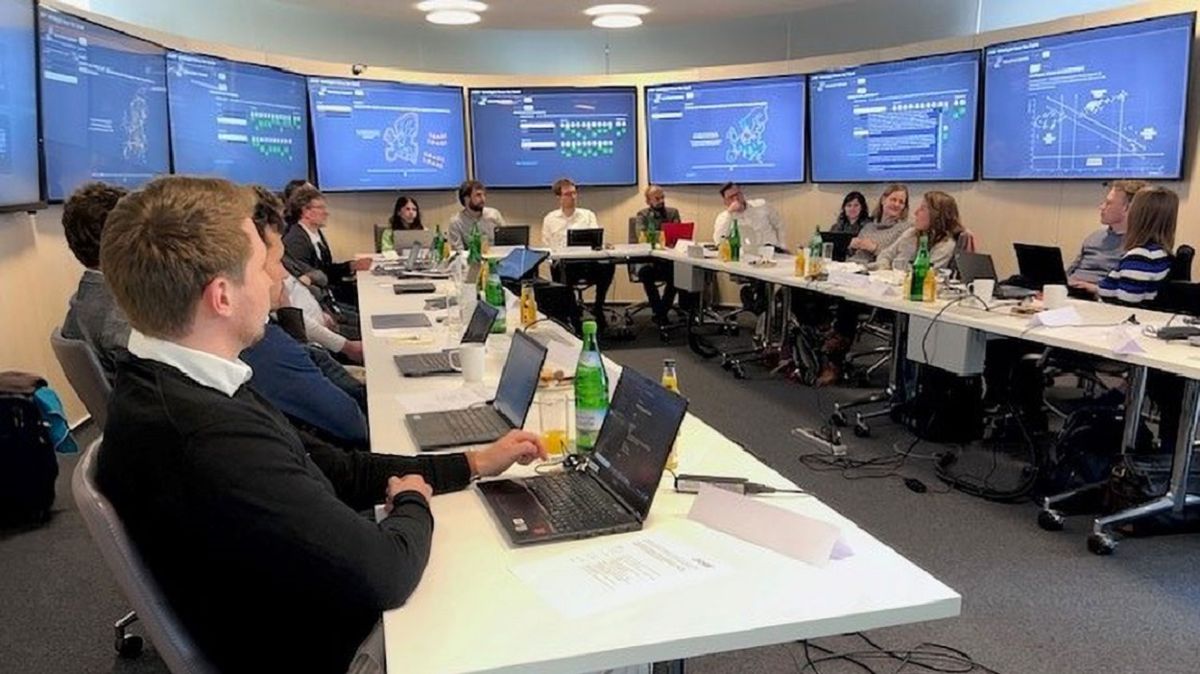
We began the process by identifying relevant questions for the stress test tool and developing consistent scenarios for the framework conditions. We then presented and discussed two versions of the tool in three workshops. This resulted in a mature version of the tool, which we then used to conduct initial design discussions on a trial basis. This showed that the analysis of regional aspects in particular offers great potential for future use of the tool.
 © IQIB GmbH
That sounds very comprehensive. Were there any particular challenges during development?
It was particularly challenging to design and embed the system analysis models into an integrative whole, as they were originally developed for other purposes. Added to this was the limited availability of data, for example on heat distribution and hotspots in cities. It was also difficult to establish as concrete a link as possible to actual impacts, as only typical implementations were modeled and no real cases. We also had to take into account the different geographical and technical scales on which the stress cases under consideration have an impact.
What exactly does that mean?
Heat and flooding, for example, have a different geographical extent and affect different aspects than heavy snowfall, storms, or dark doldrums. The situation is different again in the case of hacker attacks, for example, on the control center, central substations, or decentralized PV systems. In addition, it turned out that the stress cases are relevant to different systems in different ways, which we also had to take into account.
How does the stress test tool work in concrete terms?
The tool bundles the results of our analyses in such a way that stakeholders can design resilient energy systems. It simulates extreme cases that we had examined as examples for individual regions. Thanks to statistical methods and generic typologies of technologies and stakeholders, the results are transferable. The tool also shows typical effects that are also relevant for other regions.
Were there any elements that were particularly important to you?
Our central approach was to develop a tool that makes it easy to identify the advantages and disadvantages of different options in terms of their resilience. In addition, the details of important background information and assumptions underlying the analyses should be transparent to decision-makers in practice. Furthermore, the tool is web-based and can be used in a multi-screen environment, similar to a decision theater, so that the effects of alternatives can be easily compared with each other.
How can it be used in practice?
We developed the tool primarily for energy systems. The focus is specifically on the system analysis-based design of resilient infrastructures in cities and regions. However, it can also be extended to other critical infrastructures.
What other areas of application could you foresee?
Absolutely. The increasing number and intensity of stress events make the approach increasingly relevant. We also see clear transfer effects here that should be exploited for broader application. However, specific analyses need to be added for this purpose. With broader data bases and additional models, we could also adapt the tool specifically for other regions and scenarios.
What questions remain unanswered, and how could the research be continued?
One important unanswered question is how the stress test environment that has been developed can be further expanded and used to support the resilient design of critical infrastructure in cities and regions. Extreme events are occurring at ever shorter intervals and with ever greater intensity. It would therefore be useful to integrate further analyses and present them visually, for example in informative charts showing the vulnerability of other supply situations such as water, wastewater, health, medicine, food, other everyday necessities, etc. The different requirements in different decision-making contexts must also be taken into account. Broader use of the tool, for example in the energy sector, also requires an expanded database. Maps of vulnerable locations and technologies based on simulations of extreme events would be particularly helpful, for example. These gaps still need to be closed in order to make the tool usable for other areas of application.
The interview was conducted by Mareike Lenzen, Public Relations Officer at Project Management Jülich.